Get Full Government Meeting Transcripts, Videos, & Alerts Forever!
Get email alerts on the County Budget topic
No spam. Unsubscribe anytime.
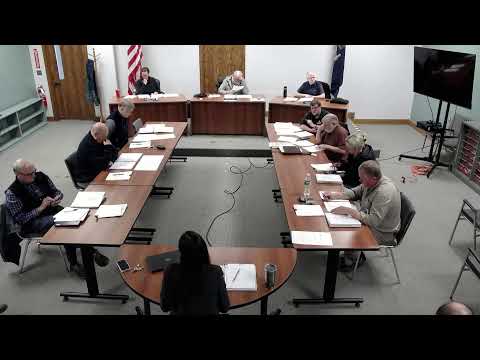
Knox County advances 2026 budget, approves retroactive raises, accepts emergency grants and swears in budget committee members
Summary
At a March 31 special meeting, the Knox County Commission approved retroactive 2026 step and COLA increases, accepted emergency management grants, appointed and swore in budget committee members, and heard sustained questions about a proposed 50% increase to the communications fee and staffing at the county’s 911 center.
The Knox County Commission on March 31 approved retroactive step and cost-of-living increases for 2026, accepted federal emergency-management grants routed through the state, and completed several appointments to a newly constituted budget committee while advancing the process for adopting the county’s proposed 2026 budget.
Commissioners voted unanimously to approve the personnel increases, which are retroactive to Jan. 1, 2026, after a discussion about whether unreconciled 2025 balances could be used to offset 2026 costs. “We diminished what our undesignated availability was by funding the budget,” a commissioner said during discussion, and staff noted the 2025 audit will not be complete until June. The chair called the vote and the measure carried 3–0.
The panel also accepted Emergency Management Performance Grant (EMPG) funding and related Local Emergency Planning Committee (LEPC) funds. Staff described the grants as federal awards administered through the state and said problematic language tying grants to immigration enforcement had been removed; the larger grant was cited at about $69,885, with roughly $7,000 identified for a part-time clerk (5 hours/week) and nearly $7,000 for hazmat training support to towns. Staff said declining the grants would require the county to fund those services directly.
In the appointments portion of the meeting the commission moved to appoint Roger Peabody to the budget committee (District 7/Warren). Commissioners swore the nominee into office during the session and then turned the meeting over to the budget committee for its organizational work. The joint body confirmed multiple district representatives (including George Hobbs, District 1, Spruce Head; Nicole, District 3, Rockland; and Steve Manning, District 3) and elected committee officers, with Nicole chosen as vice chair.
After officer elections, committee leadership presented a high-level “visual budget” that outlines the county’s proposed 2026 revenue and spending by department and line item. Staff said the budget drivers this year include personnel cost increases (wages, health insurance), contract and insurance cost growth, a shift in the corrections budget because of a transition to a holding facility, IT license upgrades previously covered by ARPA, and several building- and law-enforcement-related capital projects. The presenter emphasized the 2025 year-end figures are not finalized until the pending audit and that the visual budget is a living document.
The visual budget prompted extended public and member questions about the communications line item. Public commenters from the town of Washington raised the 50% communications increase as “unreasonable,” warning it would magnify the proposed county increase from about 11% to roughly 16.2% at the town level. Don Grenell, chair of the Washington town budget committee, said: “A 50% increase to that one department is unreasonable.” Katherine Grenell, select board chair for Washington, said her board supported those concerns.
Commissioners and staff explained the apparent spike stems largely from a decision in 2024 to apply about $400,000 of undesignated funds to reduce the tax impact on towns; with those reserves spent, the communications budget must now show the true ongoing cost. Commissioner Mark Ratner — a newly elected commissioner with decades of public-safety experience — defended the investments, saying addressing long-standing problems at the 911 call center was a public-safety priority. “Public safety is number one,” Ratner said, and he provided a town-level illustration of how particular staffing additions affect a local mill rate.
Jessica Lennon, director of the Regional Communication Center, described the center’s staffing and training needs and said regionalization or contracting with other counties is feasible but would require addressing technical hurdles such as radio coverage and CAD interoperability. Lennon reported the center had reduced reliance on off-duty officers and premium pay: “We have 12 positions. We have 11 of them filled,” she said, adding that some staff remain in training and that full certification takes months.
Committee members asked staff to provide municipality-level breakdowns of the cost changes and a clearer split between continuing operations and new services; staff said they would circulate that data ahead of the next meeting. The committee discussed meeting dates and noted that the final public hearing and vote require a 10-day public notice; members agreed to schedule additional sessions as needed. Future meetings will be livestreamed and posted to the county’s YouTube channel.
Actions recorded at the March 31 meeting will be incorporated into the formal budget review: the commission and budget committee will continue hearings and department-level reviews before an anticipated adoption of the 2026 budget in May 2026.