Get Full Government Meeting Transcripts, Videos, & Alerts Forever!
Get email alerts on the Budget Process topic
No spam. Unsubscribe anytime.
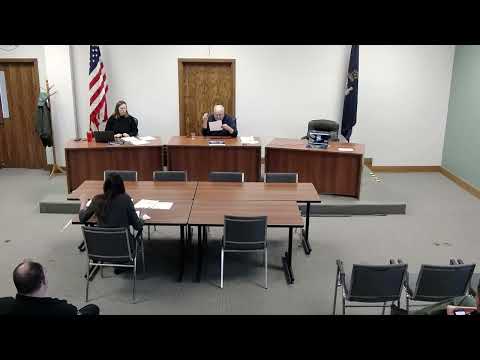
Knox County Commission clears path to resume 2026 budget work after LD 2158, reviews emergency management grants and jail funding proposals
Summary
The county said LD 2158 was signed into law, allowing it to appoint a budget committee member and proceed with the 2026 budget process; officials also reviewed EMPG/LEPC emergency-management grants that carry court-related repayment risks and discussed a proposed state jail funding bill and two-year study committee.
The Knox County Commission said on the record that LD 2158 was signed by the governor, clearing a procedural obstacle that will allow the commission to appoint a new member to the county budget committee and for the committee to convene and finalize its membership for the 2026 budget cycle. The announcement followed comments about how uncertainty had stressed county staff and municipal partners during the delay.
Donald Gell, who identified himself as "chair of the budget committee in the Town of Washington," asked how the public and municipal officials could participate in drafting and reviewing the county budget. County administrators responded that administration prepares a draft budget for the commission, the county budget committee must achieve a quorum before formally meeting, and that the committee will hold a series of open meetings (department presentations followed by public hearings) before sending a recommended budget back to the commission. Staff said they expect the committee to begin meetings in the coming weeks and estimated a 30–60 day window from draft to public hearing for the initial review cycle.
Commissioners reviewed two Department of Homeland Security grants — the Emergency Management Performance Grant (EMPG) and related LEPC funding — that staff asked the commission to accept and place into the draft budget. Director Richards said the EMPG is “incredibly important,” adding that it provides roughly 50% reimbursement that offsets wages and related EMA budget costs. Commissioners raised a legal risk: parts of the grant wording had been struck by courts in other matters, and the county could be required to return funds if higher courts reverse current injunctions. Officials said those repayment scenarios appear more likely to affect the 2026–27 cycle, but they acknowledged some uncertainty about how far back repayments could be required.
Separately, a commissioner described a pending state bill that would provide roughly $8 million to county jails statewide and reported a legislative effort to form a two-year study committee to examine county jail organization and alternative service models. The speaker said the committee would review county jails across the United States to surface possible efficiency or organizational changes and that the bill and study proposal were expected to move through the finance committee.
Why it matters: LD 2158 ends a legal barrier that paused the county’s budget calendar and allows the joint budget process to begin; the EMPG/LEPC grants provide material budget relief for EMA but carry legal uncertainty that could require future repayment if court rulings change; and the jail funding/study proposal could shift state support and county budget expectations for corrections services.
Next steps: staff said a final budget summary and an interactive visual budget would be posted on the county website within 24 hours, and the first joint budget committee meeting was likely to occur March 31 at 6 p.m. for an initial round of department presentations and public review.