Get Full Government Meeting Transcripts, Videos, & Alerts Forever!
Get email alerts on the Business Development District topic
No spam. Unsubscribe anytime.
Princeton council approves business development district, imposing local sales and hotel tax
Summary
After extended public comment and debate about affordability and transparency, the Princeton City Council approved an ordinance creating Business Development District No. 1 to fund downtown and commercial improvements using an additional local tax within a defined district.
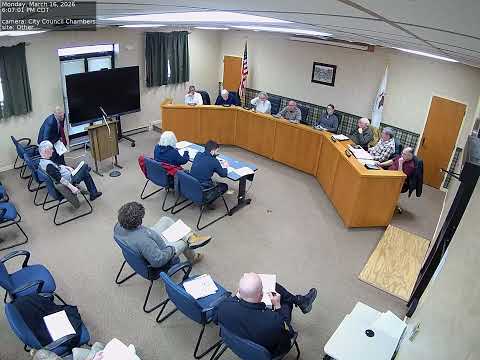
Princeton’s City Council on March 16 adopted an ordinance establishing Business Development District No. 1, creating a new local revenue stream the city can use for façade improvements, pedestrian and bicycle access, storefront renovations and targeted business assistance.
The public hearing—part of the council’s regular meeting—featured a detailed presentation by Michael Zaring and city legal adviser Herb Klein, who said the district uses an Illinois statutory mechanism that allows incremental sales‑tax increases (in quarter‑percent steps up to 1%) in a geographically defined area. "These become relatively common in Illinois," Klein told the council, citing Illinois Department of Revenue counts and explaining the state remits the tax proceeds separately to the municipality for a designated fund.
Supporters said the district is intended to capture spending by nonresidents and help existing businesses adapt to a changing retail market. "The daytime population of Princeton grows by 1,200 to 2,500 people a day," resident Lyn Old told the council, citing Placer AI visitation data and arguing the district would draw dollars generated by visitors. Proponents, including council members who favor the plan, emphasized committee oversight and a scoring matrix developed with Hometown Consulting to prioritize projects.
Opponents and several residents voiced concerns about transparency and the impact on people on fixed incomes. Ernest Wington asked, "Who's going to receive this money? How is it going to be doled out?" and said the city had not answered comparable questions at prior meetings. A resident who identified only as Michael said the measure would be "a number tax on the taxpayers" and warned of the cumulative cost to people living on fixed incomes.
Council and staff responded with procedural and programmatic details: Klein explained that grocery sales, prescriptions and titled vehicles are exempt; staff said roads and streetscapes are eligible but would not be prioritized for this fund; and Zaring described a citizen committee and a scoring matrix to evaluate applications. "The committee identifies need, expected results and return on investment," Zaring said, adding that the council would have final approval on funding decisions.
The ordinance (O‑26‑004) also allows the city to apply the district to local hotel‑operator occupation tax if the council chooses to include it. During council debate, members acknowledged concerns about affordability while some argued in favor of proactive measures to retain businesses and protect historic buildings. The council recorded its positions during debate and completed the final reading and adoption of the ordinance.
Next steps: staff and the appointed committee will finalize scoring criteria and procedures for grant/loan applications, and the council will review recommendations before any funds are disbursed. The ordinance allows the tax to remain for up to the statutory maximum term (23 years) or until the district’s projects and municipal obligations are paid.
Votes and public record: The council moved and seconded the final reading of ordinance O‑26‑004 during the March 16 meeting after the public hearing and discussion. (Official vote tallies and the ordinance text are available in the council packet and the city clerk’s record.)