Get Full Government Meeting Transcripts, Videos, & Alerts Forever!
Get email alerts on the Pavement Management topic
No spam. Unsubscribe anytime.
Citrus County unveils public pavement dashboard to increase transparency
Summary
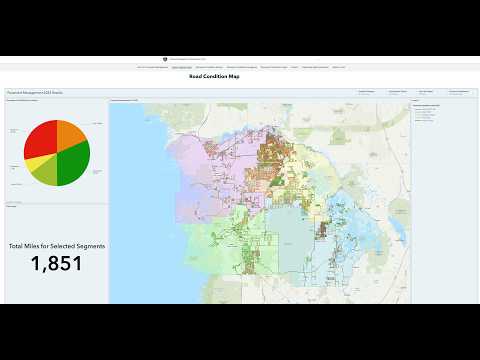
Citrus County released a public pavement management dashboard that maps 1,851 centerline miles of county roads and the condition data used to guide treatment priorities, drawing on a countywide road survey from early 2025. County engineering operations manager Charles Leazott said the tool is a "living system" that will be updated and invites public comment.
Citrus County has unveiled a public pavement management dashboard that maps 1,851 centerline miles of county‑maintained roads and displays the segment‑level condition data behind paving and maintenance decisions, County engineering operations manager Charles Leazott said.
Leazott said the website and dashboard were created "for one simple reason, transparency." He told viewers the dashboard is intended to introduce the pavement management system to the public and explain how the data were collected during a countywide road survey performed in early 2025.
The dashboard displays multiple condition variables for each road segment — including cracking, rutting and surface wear — along with historical treatment data. "That's tens of thousands of data points feeding into a network level model," Leazott said, describing how the county translates raw survey results into network‑level priorities.
County staff said every county‑maintained road is evaluated using standardized engineering practices to produce condition data for the entire network. Leazott emphasized the dashboard is not a static annual list but "a living system": as new data become available in future years, the county plans to add those updates to the public view.
Leazott contrasted the new tool with past practice, saying previous pavement decisions were made with the best tools and funding available at the time but that the dashboard now lets residents "see trends, see needs, and see outcomes" so the basis for priorities is visible.
Framing pavement as core everyday infrastructure, Leazott noted the effect on residents: "This isn't just pavement. It's how we get to work. It's how our kids get to school. It's how emergency vehicles reach our homes." He invited residents to explore the website, examine the dashboard and submit questions; he said he would be reading the comments.
The county did not give a timetable for specific repaving projects in this presentation; the dashboard is presented as an informational, data‑transparency tool and a foundation for future decisions.