Get Full Government Meeting Transcripts, Videos, & Alerts Forever!
Get email alerts on the Public Health Opioid Response topic
No spam. Unsubscribe anytime.
County receives opioid needs assessment; consultants recommend 12 priority areas and commissioner workshop
Summary
Consultants from Corona Insights presented a county opioid assessment showing overdose deaths rose sharply after 2020, fentanyl is the main driver, prescribing rates exceed national averages, and the county lacks capacity across prevention, harm reduction, treatment and recovery; consultants will help the commission prioritize next steps.
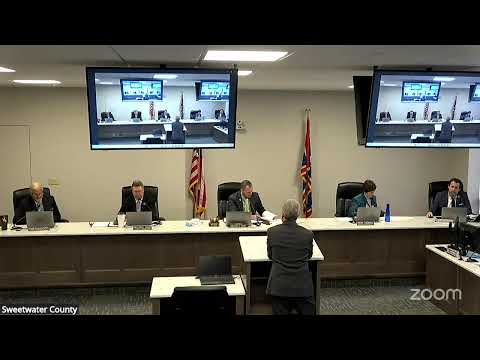
Sweetwater County commissioners on March 17 received a comprehensive opioid needs assessment from Corona Insights that charts a local increase in overdose deaths and identifies gaps across the full continuum of care.
Beth Mulligan and Annie Theodoropoulos, the lead consultants, told the board that while the county’s population remained flat to slightly declining in recent years, overdose deaths rose steeply between 2020 and 2024—averaging roughly 15 deaths annually versus fewer than three per year in the early 2000s. The consultants traced that rise to the broader national pattern: prescription opioid over‑supply followed by a transition to illicit heroin and then much more potent synthetic opioids such as fentanyl.
Key findings include: - Opioid prescribing in Sweetwater County (about 74 prescriptions per 100 persons) exceeds state and national averages (roughly 43 per 100). - A meaningful portion of misuse involves pills diverted from a single prescriber or from friends/family. - The county has limited treatment capacity and long waits for medication‑assisted treatment (MAT); court‑referred pathways are more streamlined than self‑referral. - Harm‑reduction needs (Narcan availability, overdose response training, detention‑center interventions) and recovery supports (housing, peer groups, family services) are gaps.
"Fentanyl is currently the primary cause of overdose death," Mulligan summarized, and the consultants recommended 12 strategic focus areas across prevention, early intervention, harm reduction, treatment and recovery. They proposed a commissioner prioritization session to weigh impact, cost and feasibility so opioid‑abatement funds can be deployed to highest‑value interventions.
Commissioner Slaughter and others said the assessment will guide decisions for expending opioid settlement funds and requested that the consultants lead a prioritization workshop with commissioners to produce an implementation list.
What's next: Corona Insights will facilitate a prioritization meeting with the commissioners and county stakeholders to produce a ranked list of recommended investments for opioid‑abatement funding.