Get Full Government Meeting Transcripts, Videos, & Alerts Forever!
Get email alerts on the Family Court topic
No spam. Unsubscribe anytime.
Appeals Court examines separation‑agreement language in Tester v. McDill contempt dispute
Summary
A contested reading of a separation agreement's phrase 'in addition to' underpinned an Appeals Court contempt hearing. The appellant argued the judge erred by refusing financial exhibits and that 'in addition to' means 'besides' not 'in excess of'; appellee counsel said the father continued to pay base support and the agreement was not ambiguous.
The final argument of the session centered on a family‑court contempt action and interpretation of a separation agreement provision governing supplemental child support.
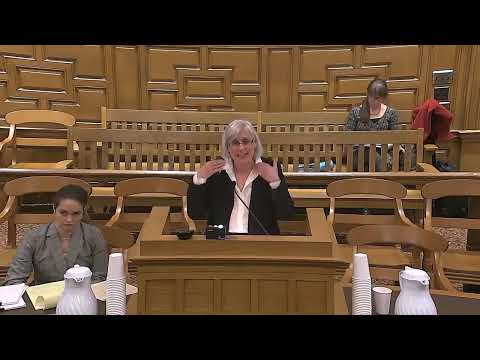
Self‑represented appellant Kerianne McDill told the panel the court misread the phrase "in addition to" and denied relevant financial exhibits and an evidentiary hearing. McDill argued the clause should be read to impose 20% on non‑salary payments "in addition to" a fixed weekly amount, not only where a salary threshold is exceeded. She said the judge would have had the record to show higher combined income at divorce if the exhibits she proffered had been accepted.
Appellee counsel Brian Waller answered that the agreement was not ambiguous, that the father continued to pay the base child‑support amount calculated under guidelines even after leaving salaried employment, and that the contempt proceeding required clear and convincing proof of a deliberate and unequivocal breach. The panel questioned whether the first paragraph operated as a base (effectively imputing $375,000 salary absent modification) and whether a modification rather than contempt was the appropriate remedy when support arrangements change.
The court heard competing proposals for remedy and evidentiary scope and took the matter under advisement.