Get Full Government Meeting Transcripts, Videos, & Alerts Forever!
Get email alerts on the Airport Infrastructure topic
No spam. Unsubscribe anytime.
Meriwether County Airport Authority asks commissioners to support roughly $200,000 match for apron rehab
Summary
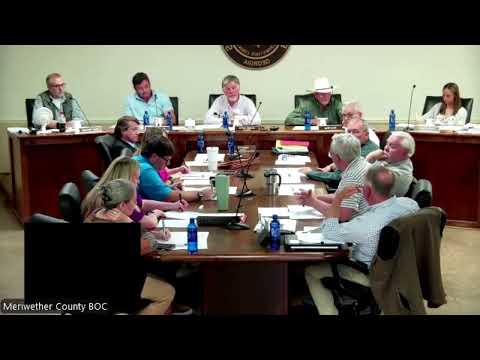
The Meriwether County Airport Authority presented its FAA-aligned five-year capital plan and asked county commissioners to support a local match of about $198,000 (rounded to $200,000) to unlock roughly $1 million in FAA discretionary funding for apron rehabilitation; commissioners requested clearer budget impacts and quarterly briefings.
The Meriwether County Airport Authority told county commissioners on a joint work session that it needs the county—or a roughly $200,000 local match to secure about $1 million in FAA discretionary funds to rehabilitate the airport pron, the main ramp area in front of the fuel farm.
An authority representative outlined recent capital work at the airport, including a runway extension, surface rehabilitation and a systemwide replacement of runway lighting with LED fixtures paid in part by federal funds. The authority said the apron is showing age-related cracking and that a full rehabilitation would be the next major project on its five-year capital improvement plan (CIP). Staff estimated total construction at about $1.18 nd referenced a planning figure of about $1.2 million, with the airport—xpected to provide roughly $198,000 of local match.
The authority emphasized how FAA funding works: aviation fuel taxes flow into FAA-administered funds that must be spent on aviation projects; FAA ranks projects by safety and capacity and requires that safety items be addressed before revenue-generating items. Staff said FAA—ormats and scoring shape the CIP and that runway and safety projects receive higher national priority rankings than items such as perimeter fencing.
Commissioners asked for specifics on budget impact and repayment history. Authority staff said the airport—xpanded its fuel farm from a 3,000-gallon tank to 12,000 gallons, sells multiple tanker loads annually (authority remarks estimated two to three tanker deliveries in peak years, roughly 16,000to 24,000 gallons in reported scenarios) and collects a modest margin on fuel sales. Staff also said the airport has about 32 based aircraft and an average of roughly 38to 45 operations per week (about 2,100 a year), most stopping for fuel.
Commissioners pressed on finances tied to hangar loans and county backing. Staff said the county previously advanced funds on behalf of the airport and that annual county debt-service payments tied to that backing were cited in the discussion at roughly $111,000to $112,000 per year; commissioners requested updated amortization and monthly-payment schedules to understand long-term obligations and to calculate the local match s a share of the county budget.
On procurement and timing, authority staff said design and bid-ready specifications could be prepared within about 60 days after county approval, then would undergo FAA review before a 30-day public advertisement for bids. Staff warned that FAA review times can be slow and that federal grant thresholds may trigger additional audit requirements; presenters estimated a single-audit cost of roughly $20,000 if a federal grant crosses the audit threshold.
Commissioners expressed differing priorities. Some described the airport as critical infrastructure that helps attract investment; others said county roads, courthouses and other capital needs are more urgent and asked whether the apron work could be delayed. Several commissioners asked that authority staff bring clear, written funding scenarios and the specific monthly or annual fiscal impact to the county before any commitment. The board discussed meeting quarterly with airport authority staff to review CIP items and monitor progress.
The meeting included two procedural motions at the start: commissioners adopted the county agenda and separately adopted the Airport Authority agenda by voice or show of hands. No formal vote on the apron rehabilitation project took place at the session; the item was presented for discussion and for the commissioners to consider supporting the local match.
Next steps: authority staff will provide detailed budget scenarios, updated amortization schedules for outstanding loans, and bid-ready specifications timelines for the apron project if the commissioners signal support. Commissioners requested quarterly joint briefings to ensure transparency on airport CIP items and county budget impacts.