Get Full Government Meeting Transcripts, Videos, & Alerts Forever!
Get email alerts on the Criminal Appeals topic
No spam. Unsubscribe anytime.
Appeals Court hears paired Barnacle appeals over witness intimidation and reckless-endangerment verdicts
Summary
The Appeals Court heard paired appeals in Commonwealth v. Brian Barnacle and Commonwealth v. Crystal Barnacle. Defense lawyers argued key convictions turned on improper inferences and misstatements about witness testimony; prosecutors said the context and prior abuse history supported convictions. The court took the cases under advisement.
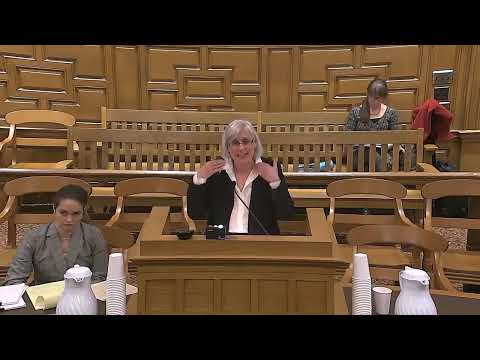
A three-judge panel of the Massachusetts Appeals Court heard arguments in two companion appeals challenging convictions tied to alleged witness intimidation and reckless endangerment.
Defense counsel Lisa Maderos told the court the required‑finding on an intimidation charge against Brian Barnacle should have been entered because the record lacks proof he specifically intended to intimidate the neighbors. Maderos said the prosecutor had misstated testimony in closing and that the evidence showed Barnacle was a familiar presence in a common area — not a figure trying to eavesdrop or look into windows. "The required finding should have been allowed," Maderos told the panel.
The justices repeatedly pressed whether reasonable inferences drawn from pacing, glancing, and presence in a shared driveway could supply the specific‑intent element the statute requires. Maderos argued jurors heard testimony that the child had spoken with a police officer at school but did not testify she told Barnacle about his case — and that the record does not show Barnacle knew law enforcement was investigating him.
Assistant District Attorney Elizabeth Sweeney replied that the Latimore standard requires viewing the record in context. Sweeney pointed to testimony and detective observations that Barnacle moved about the parking area, "moving around from window to window," and that the neighbors reported feeling scared and nervous. She urged that history, timing and the detective's observations supported the jury's verdicts.
The panel also questioned whether the reckless‑endangerment convictions could stand without specific unanimity about which act the jury relied on. Defense counsel argued the jury may have considered multiple bad acts spanning years without unanimously agreeing on a single predicate incident; Sweeney countered that limiting instructions and the long course of conduct were admissible to show the charged pattern.
In the companion appeal of Crystal Barnacle, counsel Cara Shayet focused on an alleged statement the mother made during a Department of Children and Families (DCF) removal. Shayet said the record supports only that the mother told her child, "Don't say anything. Your brother's already said enough," during a traumatic removal and that there is no clear proof she intended to impede a criminal investigation. The prosecutor countered that the child's fear, the presence of school officials and DCF staff, and the family's history supported a reasonable inference that the mother discouraged the child from speaking with investigators.
After extended questioning of lawyers on both sides about what the jury heard and what inferences were reasonable, the court took the appeals under advisement. The judges signaled particular interest in whether alleged misstatements in argument, the scope of prior‑bad‑acts evidence, and jury instructions affected the sufficiency of the convictions.