Get Full Government Meeting Transcripts, Videos, & Alerts Forever!
Get email alerts on the Facilities topic
No spam. Unsubscribe anytime.
District facilities review: consultant flags about $109 million in 10-year maintenance needs
Summary
Consultant LMG presented a facilities assessment and demographic addendum showing aging systems and a roughly $109 million 10-year maintenance projection for elementary schools, with HVAC ($21M) and roofs ($15M) among the largest line items.
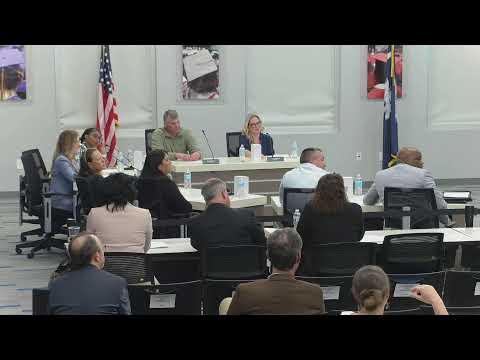
A consultant for the Rockland School Board told members Monday that the district faces substantial maintenance-only needs across its elementary schools in the coming decade.
Mr. Britain of LMG presented an addendum to a February demographic study and a facilities assessment that used a 10-year planning horizon limited to maintenance needs (not new capital projects). The assessment included life-cycle analysis (HVAC ~15 years), deep dives on roofing and fire alarm systems, and a per-facility 20-year maintenance history.
The consultant summarized projected 10-year maintenance needs across elementary facilities at roughly $109 million, with two major categories highlighted: HVAC at about $21 million and roofs at about $15 million. "HVAC at 21 million dollars. Roofs you have 15 million dollars just in that total of 109 million," the presenter said during the slide review.
LMG provided school-level examples: Oak Knoll was shown with projected needs of about $7.2 million over the next 10 years; Richmond Drive approximately $8.7 million; North Side about $6.2 million; Leslie around $10 million projected; and York Road projected near $10 million once a presentation typo was clarified. The consultant noted that figures are maintenance-only, using life-expectancy benchmarks and historical spending patterns.
Board members pressed for clarifications on "core capacity" versus building capacity, scheduling of large replacements (noting that chiller plants and large HVAC systems require specialized work), and whether demographic projections include permitted but unbuilt developments. The consultant said regional COG and Cropper GIS were used and that projections incorporate permitted building permits rather than speculative land purchases.
Board members and staff noted that some mid-2000s HVAC replacements now cluster in a window requiring attention: "you've got probably 50% of the HVAC equipment in the district is 2006–2007," a presenter said, noting that districts often face concentrated replacement costs.
LMG and district staff recommended forming a community stakeholder task force to guide long-range decisions and to avoid ad hoc "firefighting" replacements when major systems fail. The board scheduled follow-up work sessions to review middle and high schools and non-school facilities.
The district did not make spending decisions at the meeting; the presentation provided the data the board said it will use to shape capital planning and community engagement before formal proposals are brought forward.