Get Full Government Meeting Transcripts, Videos, & Alerts Forever!
Get email alerts on the Student Aid Reform topic
No spam. Unsubscribe anytime.
One Big Beautiful Bill reshapes student aid: Grad PLUS eliminated for new borrowers, Parent PLUS capped
Summary
The One Big Beautiful Bill Act, signed in December, restructures federal student aid: Grad PLUS loans will be phased out for new borrowers starting in July, Parent PLUS borrowing will be capped at $20,000 per year ($65,000 aggregate), repayment plans consolidated, and Pell eligibility expanded to short workforce programs.
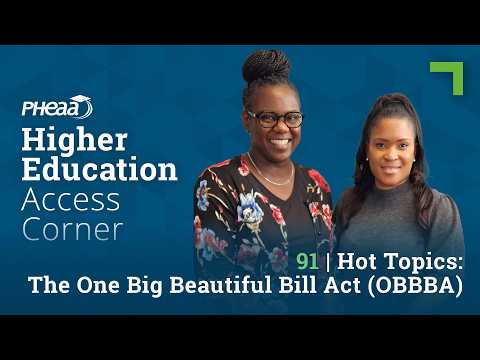
Co-hosts Tiffany De Van and Diana Brown explained changes in federal student aid stemming from the One Big Beautiful Bill Act (OBB3), which was signed into law in December and begins to take effect this summer.
The most immediate change for many borrowers is the end of Grad PLUS loans for new borrowers. The hosts said graduate and professional (Grad PLUS) loans "are being eliminated as of July 1 for new borrowers," while students who already hold Grad PLUS loans will have a limited transition period to borrow under existing terms for up to three more years. The change will likely leave some graduate students searching for private loans or alternative funding.
The law also alters Parent PLUS borrowing. The program now imposes an annual cap of $20,000 per student and an aggregate limit of $65,000 per dependent student, replacing prior practice that allowed parents to borrow up to a school’s cost of attendance. Hosts warned that parents who previously relied on Parent PLUS to cover remaining costs may need to seek private lending or other resources to fill gaps.
Repayment rules are being simplified, the hosts said. The Department of Education will consolidate multiple repayment plans into a single multi-tiered standard repayment plan and one income-driven plan, referred to in the discussion as the Repayment Assistance Plan (RAP). Borrowers were urged to keep in close contact with their loan servicers to understand how the new structure will affect monthly payments and forgiveness pathways.
OBB3 also limits hardship pauses for borrowers of new loans. The hosts noted that unemployment deferment will not be available for direct loans disbursed on or after July 1, 2027, and that forbearance for new loans will be capped at nine months during any two-year period. Those changes mean future borrowers will have fewer administrative pause options if they face short-term financial strain.
Part-time students should expect different award totals: new direct loan amounts may be prorated for students enrolled less than full-time, reducing typical freshman award levels for part-time attendance.
The hosts highlighted a separate provision that expands Pell Grant eligibility to shorter workforce programs (referred to in the episode as "Workforce PEL"). They said states, including Pennsylvania, are still developing implementation details and advised listeners to consult state education agencies for program-specific guidance.
For practical next steps, the co-hosts recommended that students and families:
- Contact their loan servicers to confirm which loans are grandfathered and how repayment will change; - Speak with their college financial aid offices for personalized counseling; and - Review official resources, including the program’s resource page and the U.S. Department of Education’s StudentAid.gov, for updates and detailed guidance.
The hosts closed by noting the program maintains a network of higher education access partners across the state to assist students and families navigating these changes.
The episode did not report legislative votes or regulatory text; it summarized provisions as described on the program and recommended that listeners consult servicers and official Department of Education and state-education websites for authoritative details.