Get Full Government Meeting Transcripts, Videos, & Alerts Forever!
Get email alerts on the Financial Aid topic
No spam. Unsubscribe anytime.
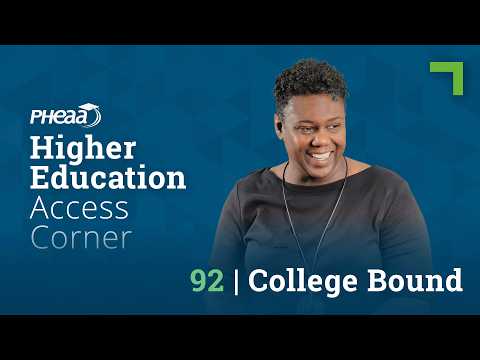
Tiffany Dean urges seniors to complete the FAFSA and research college fit before Decision Day
Summary
In a Higher Education Access Corner episode, host Tiffany Dean told high-school seniors to set near-term goals, visit campuses, check support services, and complete the FAFSA immediately; Pennsylvania students should then complete state grant forms after FAFSA submission.
Tiffany Dean, host of the Higher Education Access Corner podcast, advised high-school seniors to finalize near-term plans, research programs and campus fit, and file the Free Application for Federal Student Aid (FAFSA) as soon as possible to preserve state and federal financial-aid options.
"If you've not done it, you want to do it immediately," Dean said of the FAFSA, directing listeners to the Department of Education’s federal aid website, studentaid.gov. She framed postsecondary planning with a March Madness analogy, telling seniors to treat college and career choices like tournament preparation: identify top goals, then work backward to determine required training, coursework and supports.
Why it matters: FAFSA submission is the gateway to federal aid and, for Pennsylvania students, a trigger for state grant forms. Dean said Pennsylvania students "won't get to the state grant forms until you've actually completed the FAFSA," and that the state system will notify students by email when the state grant application is available.
Dean walked through practical steps for evaluating schools: verify the major or certificate programs you need, check whether a school’s instructional style (large lectures versus small classes) fits your learning preferences, and visit campuses at different times to assess daily life. She also urged students who learned differently to check postsecondary support services because college accommodations differ from K–12 Individualized Education Programs.
On affordability, Dean emphasized researching grants, scholarships and realistic borrowing limits before taking out loans. She encouraged students to use financial-literacy tools to estimate how much borrowing would be manageable based on projected earnings for their chosen field.
She urged students to tap available supports: high-school counselors for transcripts and recommendations, college admissions and financial-aid offices for deadlines, and higher education access partners for application help. Dean identified herself as one of 13 higher education access partners working across Pennsylvania.
Dean noted typical timing for admissions decisions: "Decision Day generally is going to be May 1st for most of those schools," and advised students who cannot make a required deposit to stay in contact with the school’s admissions and financial-aid offices about options.
Resources Dean cited include studentaid.gov for federal aid, FIA's website at fia.org for Pennsylvania state grant information, EducationPlanner.org, MySmartBorrowing resources for evaluating loans, and DealWithIt.com for financial-literacy assistance. She also urged students to apply widely for scholarships and to check local and regional opportunities with counselors and community organizations.
The episode closed with Dean encouraging seniors to finish the school year strong, secure their financial-aid steps, and enjoy senior activities once planning tasks are complete.