Get Full Government Meeting Transcripts, Videos, & Alerts Forever!
Get email alerts on the Kcata Compact topic
No spam. Unsubscribe anytime.
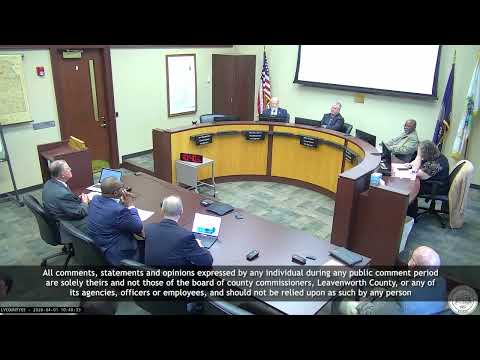
KCATA tells Leavenworth County how its federal compact can drive regional development
Summary
KCATA officials described how the authority’s by‑state compact and conduit-bond powers are being used to assemble private financing, attract projects and boost ridership; staff said KCATA has approved a dozen developments, secured roughly $58 million in economic impact and is available to partner with Leavenworth on local projects.
Chuck Ferguson, KCATA’s interim president and chief operations officer, told the Leavenworth County commission that the Kansas City Area Transportation Authority’s legal status — a by‑state compact ratified by Congress — gives it broad regional powers to advance transit‑oriented development.
"Streetcar is less of a transportation mode as it is an economic development tool," Ferguson said, citing the initial Kansas City streetcar corridor as an example of transit catalyzing private investment.
Michael Riley, KCATA director of transit‑oriented development, said the compact allows KCATA to buy or lease land, enter contracts, collect fees and use condemnation power when necessary, and to act as a conduit issuer for bonds to package large private‑sector projects. "Because of our economic development tools we have invited and welcomed roughly $58 million of economic impact," Riley said.
Why it matters: County officials pressed KCATA for practical steps the authority could take in Leavenworth County, including support for specific sites and use of KCATA’s bond and financing tools to leverage federal grants. KCATA staff and the agency’s real‑estate director, Brian Starder, emphasized that proposals go through an application and due‑diligence process and require local engagement such as letters of support before KCATA’s board considers them.
Starder said KCATA evaluates proposals against transit‑focused public‑policy goals and presents only those that meet the board’s guardrails. "We take applications, we do a lot of due diligence before we accept them and take payment for an application to ensure it’s really meeting the mission and objectives of KCATA," he said.
KCATA officials listed outcomes they say follow the approach: about 12–13 approved facilities systemwide, 11 under construction, five pending (including one in Leavenworth County), approval of 1,500+ housing units and a projected net ridership increase of roughly 600,000 riders tied to these developments. Staff said roughly 68% of approved housing units are market rate and the remainder are affordable or mixed income.
Local questions centered on what KCATA can support: hotels, stadiums, mixed‑use development and industrial parks can qualify, KCATA staff said, and the agency commonly uses long bond terms (up to 30 years) depending on the financing stack. KCATA representatives also stressed that their typical financing relies on private capital coordinated with public grants and tax‑exemption mechanisms rather than direct KCATA cash reserves.
Next steps: KCATA staff said they will continue one‑on‑one conversations with local jurisdictions and developers; commissioners asked KCATA to provide drafts of the kinds of community engagement letters and application steps local governments would be expected to provide. The presentation closed with KCATA offering to remain a facilitator in early discussions about specific Leavenworth projects.
The commission did not take a formal vote; staff said follow‑up coordination and clearer local commitments would be necessary before any KCATA board action.