Get Full Government Meeting Transcripts, Videos, & Alerts Forever!
Get email alerts on the Student Behavior Supports topic
No spam. Unsubscribe anytime.
Maricopa Unified board outlines plan to expand behavior supports, add second BCBA and K–2 reintegration classroom
Summary
The Maricopa Unified School District presented a work study recommending expansion of tier-three behavior supports: increase board-certified behavior analysts from one to two, implement school-level reset/refocus spaces, and open a district 12‑week reintegration classroom focused on K–2 students for next school year.
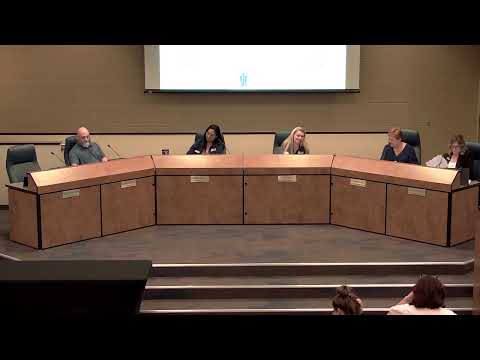
At its March 25 meeting, the Maricopa Unified School District Governing Board heard a work study from district staff and New Solutions K‑12 on strengthening supports for elementary students with repeated disciplinary incidents. Dr. Pastor, presenting the year‑long review, said the plan centers on boosting clinical staffing and creating dedicated behavior spaces to reintegrate students into classrooms.
The committee and consultant analysis found a small subset of students drives a disproportionate share of classroom disruptions. As an example, staff highlighted that 15 first‑grade students recorded seven or more discipline incidents last year—about 2% of the first‑grade population—leading the district to prioritize kindergarten through second grade for early intervention. "The goal of all this is to reduce repeat incidents, to strengthen classroom environments, and to support staff and students," Dr. Pastor said during the presentation.
The district's near‑term proposals include: hiring a second board‑certified behavior analyst (BCBA) to increase case management and coaching for registered behavior technicians (RBTs); standardizing reset or refocus spaces at every elementary site for short‑term de‑escalation; and operating a district‑level reintegration classroom designed as a medium‑term placement (the district described a 12‑week starting model) for the highest‑need students. The presenter named the district's current BCBA, Elena Quiñones, and said an additional BCBA would allow more coaching and clinical oversight of RBTs.
Board members pressed for operational detail. Members asked who would write and implement functional behavior assessments (FBAs), whether school psychologists or BCBAs would take lead roles, and how long a student might remain in a reset/refocus space. District staff said FBAs may be authored by BCBAs or by school psychologists in collaboration, that reset/refocus duration will be individualized (site short‑term placements could range from one to several days while the district classroom model begins at about 12 weeks), and that the district will set clear entry and exit criteria. Staff emphasized the importance of staffing levels, training and calibrated documentation to ensure fidelity.
Dr. Pastor told the board the recommendations grew from interviews, focus groups, discipline data reviews and a guiding coalition of roughly 20 administrators and teachers. The district will standardize documentation, refine job descriptions, provide targeted training and measure effectiveness through reductions in disciplinary incidents and pre/post perception surveys of teachers, staff and families.
On family and community partnerships, staff said several agreements and relationships are in place to support continuity beyond the classroom: Project AWARE funding ends September 30, but the district holds memoranda of understanding with two behavioral‑health partners and is developing referral pathways (examples named in the discussion included Horizon Health and Impact La Frontera and outreach connections with Molina Healthcare). "What that might look like for tier‑three parents is an invitation to consider an outside counseling referral or to take advantage of parenting behavioral workshops," the presenter said.
Board members expressed broad support for the direction and asked staff to return with operational plans and metrics for the coming year. The work study concluded with staff saying implementation is planned for the next school year, accompanied by evaluation measures to track implementation fidelity and student outcomes.
The board did not take a formal vote on new policy at this meeting; members asked staff to continue developing the program details and staffing proposals brought earlier to the board (staff indicated the board had been shown related positions on Feb. 25).