Get Full Government Meeting Transcripts, Videos, & Alerts Forever!
Get email alerts on the Kennel Ordinance topic
No spam. Unsubscribe anytime.
Mills council declines standalone kennel ordinance after rescue operators, residents raise concerns
Summary
Council declined Ordinance No. 836 on second reading after staff recommended housing animal-related requirements in the city's business-permit code; local rescue operators and residents warned new rules would burden life-saving operations and raised conflict-of-interest and process-transparency concerns.
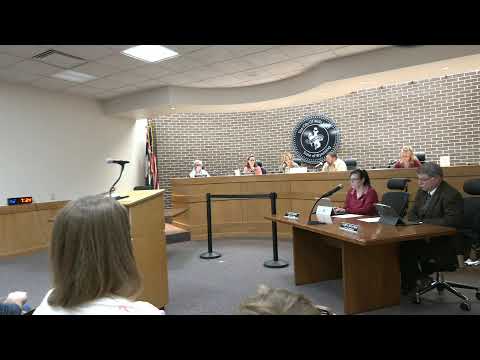
MILLS ' The Mills City Council voted against passing Ordinance No. 836 on second reading and agreed instead to address kennel, cattery and boarding standards through the city's broader business-permit process after an extended public-comment period Tuesday.
The ordinance, which proposed revisions to section 6.03.040 on kennel category requirements, was met with a staff recommendation that it be rejected because the issues it attempted to address would be better handled under the city's business-license framework. Council members voted "No" on the second reading, causing the ordinance to fail.
Why it matters: Local rescue operators and small-business owners told the council the proposed rules risked hampering animal-welfare work and could impose burdensome new costs. Several speakers said the measure appeared reactive to a specific dispute and asked the council to ensure fairness and transparency before moving ahead with regulations that would affect nonprofit rescues and small businesses.
During public comment, rescue operator Lindsey Royce, owner of For Pete's Sake, said her daycare and boarding operation helps finance rescue and placement work and that additional regulation "could make it extremely difficult, if not impossible, to continue operating in a way that sustains both the business and the rescue." Royce said her organization has helped rehome more than 550 dogs and provides community service opportunities for local youth.
Former resident Ryan Perry said he opposed the permit requirement, calling it "an added layer of regulation that acts like a tax on small businesses" and suggesting the change might stem from a personal conflict rather than a documented public-safety problem. Multiple other speakers echoed concerns that the timing and scope of the proposed ordinance created a perception of targeting specific operators.
Several commenters, including Shannon Hydrick, questioned specific language they read in the draft, such as a requirement that animals be "physically restrained or confined" within kennel premises and a mandate for privacy fences. Hydrick said some provisions, as she interpreted them, could be inhumane or ineffective.
City officials responded that the council had reviewed the existing language and the issue would be better folded into the ongoing business-permit work. Attorney Holstcher clarified that the provision requiring animals to be physically restrained or confined on kennel premises was not new: "The existing law says dogs or cats shall be physically restrained or confined within the premises of the kennel or cattery," he said, adding that the wording has been in place for roughly 20 years and was not a new imposition.
Council members and staff said they intend to work with local nonprofits and business owners on any health-and-safety standards so those standards are both fair and practical. The mayor and staff emphasized the city's preference for a community-driven process and invited affected operators to participate in drafting any business-permit requirements.
Votes at a glance: The council approved the consent agenda and Resolution No. 2026-11 (bond-schedule changes). They approved the Ridgewest subdivision agreement and appointed Kate Accord as interim police chief. Ordinance No. 836 failed on second reading after a unanimous "No" vote on the roll call for that item. The council also held executive sessions on legal matters and later authorized legal action and contact with LGOP; those motions carried by voice votes.
What's next: Council members said they will continue to develop health-and-safety standards for kennel and cattery operations under the broader business-permit code and promised outreach to affected nonprofits and owners before bringing new requirements back to the council.
Details: Council discussion noted that existing ordinances address noise, sanitation and animal-welfare concerns, and staff referenced a process of applying business-permit rules (the same umbrella that covers other types of businesses such as auto shops and massage therapy) rather than a narrowly targeted zoning ordinance. Several public commenters urged the council to adopt clear conflict-of-interest safeguards and to provide prompt, accessible communications to residents when street or utility work affects private property.
The meeting also included a staff report on complaints at the licensed establishment Diesel's; an owner in attendance, Steve Lofton, said he would ensure the issues were passed to the other owner and asked to be included in follow-up correspondence. The council returned from multiple executive sessions and approved related legal authorizations before adjourning.
(Reporting based solely on the Mills City Council meeting transcript.)