Get Full Government Meeting Transcripts, Videos, & Alerts Forever!
Get email alerts on the Nursing Discipline topic
No spam. Unsubscribe anytime.
Board panel hears allegations that APRN Ralph Hirschfeld treated a patient outside a clinical setting and signed med‑spa records
Summary
A Board of Nursing Examiners panel heard April 1, 2026 that the Department of Public Health alleges APRN Ralph Hirschfeld provided treatment to a patient outside a professional setting, developed improper personal ties and signed records for a medical spa without performing assessments; the panel voted to go into executive session for patient‑specific testimony.
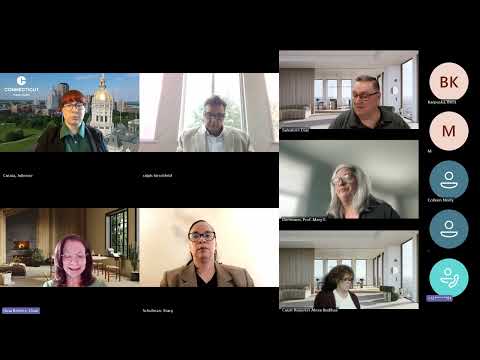
A Board of Nursing Examiners panel convened online at 1:04 p.m. April 1, 2026, to hear Department of Public Health allegations that advanced practice registered nurse Ralph Hirschfeld provided treatment to a patient outside a professional care setting, failed to maintain professional boundaries and signed medical records for a med‑spa without conducting assessments.
Attorney Kataya, speaking for the Department of Public Health, told the panel the Department will present evidence that "the respondent provided treatment to patient one outside of a professional care setting and that care given was not within the standard of care." Kataya said the Department also will present testimony that Hirschfeld developed a personal and romantic relationship with that patient and signed several medical records for Emily Jolie Medical Spa despite performing no assessment of those patients. The Department cited Conn. Gen. Stat. 20‑99b as the disciplinary statute under which it seeks revocation or other discipline.
Hirschfeld, who testified after being sworn, acknowledged his RN license was first issued in 2011 and his APRN credential in 2014 and described prior practice in primary and behavioral care. He said he has experienced significant health problems following a severe COVID infection that affected his vision and cognition and that those issues reduced his clinical duties.
On the med‑spa allegations, Hirschfeld disputed the facts and suggested problems with the spa owner's credibility. "This woman's got a history of fraud. She's on probation for fraud. She's got numerous numerous aliases," Hirschfeld said during his opening remarks; he also asked the panel to consider sealed medical and evaluative records relating to his health as part of his defense.
Because counsel signaled that forthcoming answers could require confidential patient information, the chair asked the panel to move into executive session for patient‑specific testimony. Sal Diaz moved to go into executive session and Mary Dietman seconded; the motion carried. Technical problems with webinar access followed, and hearing staff arranged a new executive‑session link so participants could be moved into the sealed room.
The panel entered multiple Department exhibits into the public and sealed records, including investigative reports, complaints, consultant reports and patient records (some sealed). Respondent exhibits — including a VA disability letter, neuropsychological testing and other medical records — were entered under seal at the respondent’s request. The chair instructed the panel to consider each document’s weight as the hearing proceeds.
Because the panel was sitting as a panel rather than the full board, the chair explained that it will prepare a proposed memorandum of decision for the full Board of Examiners to consider after fact‑finding is complete; the full board will issue any final disciplinary order. The hearing moved into executive session for patient‑specific testimony; no final disciplinary decision was made on the record during the public portion of the hearing.