Get Full Government Meeting Transcripts, Videos, & Alerts Forever!
Get email alerts on the Public Services topic
No spam. Unsubscribe anytime.
Code‑enforcement and animal‑services presentations highlight trash removal, encampment work and shelter outreach
Summary
City staff told the Ceres City Council the code‑enforcement team removed 187,000 pounds of trash last year, logged roughly 883 new requests in 2024–25, and has new administrative staff; county animal services reported expanded TNR and adoption campaigns and said the agency takes in roughly 7,000 animals per year.
At the Aug. 25 council meeting, Ceres police and code‑enforcement staff and the county animal‑services director presented annual work summaries and operational changes.
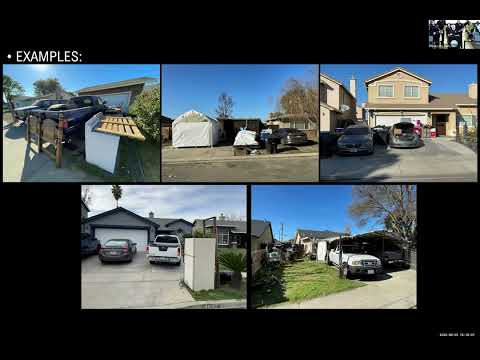
Sgt. Dirk Nuneheis (administrative sergeant, Ceres Police Department) said the code‑enforcement unit emphasizes education first and reported that last year officers collected and disposed of over 187,000 pounds of trash citywide, citing illegal dumping and abandoned encampment removals as major drivers. He announced the hire of a code‑enforcement secretary, Cassandra Lopez, who is expected to start in about two weeks; staff said that administrative coverage had, until now, drawn officers away from field work.
Officer Barney described daily duties—red tags for hazardous buildings, graffiti response, abandoned‑vehicle and illegal‑dumping abatement—and said the unit logged approximately 883 new requests in 2024–25. He gave case examples, including one property with dozens of animals that required a prolonged intervention.
Officer Angie Martinez discussed unpermitted vendors, noting a countywide increase in unpermitted vending but a local decrease linked to combined education and enforcement. Staff said vendor follow‑up includes offering permit applications, issuing administrative citations for noncompliance and coordinating impound inspections with Environmental Resources.
Jack Taylor summarized work on homeless encampments, reporting a decline from 884 camps last year to 806 this year (a 9.23% decrease) and described shifts to smaller, less visible encampments; he credited daily outreach, trespass enforcement and partnership with the CARE (community assessment response engagement) team for reconnecting some individuals to housing and services.
Lily Yap, executive director of the county animal‑services joint‑powers agency, described 24/7 dispatch, prioritized response to aggressive animals and expanded trap‑neuter‑return (TNR) intake after the shelter reopened in August. She said the agency receives a wide range of animals each year (dogs, cats, rabbits, goats) and indicated the agency processes roughly 7,000 animal intakes annually; the agency also used a fee‑waiver adoption campaign to clear shelter capacity and support proactive community services.
Council members thanked staff and asked for additional detail on staffing and budget impacts. Public commenters and one resident (John Warren) urged the council to plan for expiring ARB funds and to prioritize retaining code‑enforcement staff in the next budget cycle.