Get Full Government Meeting Transcripts, Videos, & Alerts Forever!
Get email alerts on the Land Use topic
No spam. Unsubscribe anytime.
Weed council upholds Planning Commission denial of proposed highway digital sign, sends code fix back to Planning Commission
Summary
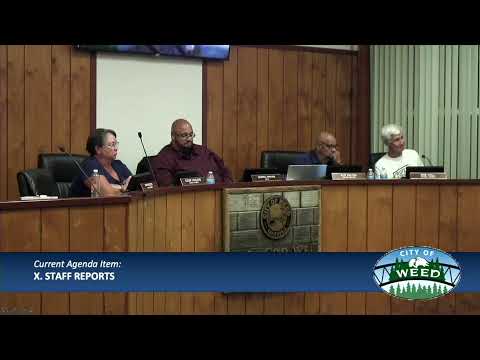
After hours of public testimony, the Weed City Council upheld the Planning Commission’s denial of a permit for a digital highway-facing sign and directed staff to draft clearer sign-code language and return it to the Planning Commission for consideration.
The Weed City Council on a unanimous vote upheld the Planning Commission’s July denial of a conditional-use permit for a proposed off-site digital highway sign at 710 Shasta Drive and directed staff to draft clarifying amendments to the city’s sign ordinance and return them to the Planning Commission.
Contract planner Mark Teague told the council the core issue was an ambiguous provision in the sign code that left city staff and commissioners uncertain whether the city allows multiple highway signs within the same zone. "The sign code is a little bit murky," Teague said, explaining staff’s three options: deny the appeal, approve the appeal with conditions, or remand the matter for clearer ordinance language.
Scott Smith of Legacy Sign Company, the applicant, described the proposed sign as targeted at highway motorists, auto-dimming at night and professionally designed; he offered to hold community roundtables to address brightness, aesthetics and content-control concerns. "I would be happy to come up at any time and just have that open discussion and see if it does make sense," Smith said.
Several residents testified in strongly worded opposition. Dennis Smith cited the ordinance text and argued the existing code effectively allows only one highway advertising sign in the corridor; Barbara HEC and other neighbors said the sign would be an eyesore, a driver distraction and a commercial venture unlikely to prioritize public-service messages. "I think we need to ask ourselves what's in it for the city," one speaker said.
After discussion, Councilmember Palini moved to uphold the Planning Commission decision and to direct staff to prepare proposed code amendments and return the matter to the Planning Commission for recommendation. The motion, including a secondary amendment to route the draft to the Planning Commission, carried without objection.
Why it matters: The project would have been the city’s first highway-facing digital sign and residents argued it raised both land-use and public-safety questions. The council’s action preserves the Planning Commission’s denial while putting the sign code itself on track for revision so future applicants and staff have clearer rules.
What’s next: Staff will draft proposed sign-code language for Planning Commission review; if the code is amended, a future applicant could reapply under the clarified rules.