Get Full Government Meeting Transcripts, Videos, & Alerts Forever!
Get email alerts on the Automated License Plate Readers topic
No spam. Unsubscribe anytime.
Rohnert Park limits ALPR data retention to 30 days amid public concern over data sharing
Summary
After weeks of public scrutiny, the Rohnert Park City Council voted to amend its records-retention schedule and reduce automated license-plate reader (ALPR) data retention to 30 days, and corrected an administrative duplication; the decision followed extensive public comment warning about out-of-state access, ICE use, and security risks.
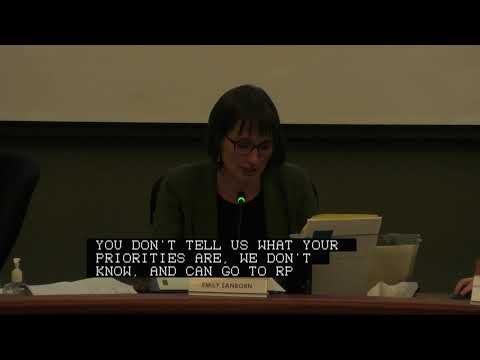
The Rohnert Park City Council on Jan. 27 approved an amended records-retention resolution that shortens the retention period for automated license-plate reader (ALPR) data from the city's Flock Safety system to 30 days and removed a duplicated record entry.
Chief of Public Safety presented the city's ALPR footprint (32 cameras total, including 30 ALPR units and two pan-tilt-zoom surveillance cameras) and recent investigative cases where ALPR leads aided arrests, vehicle recoveries and missing-person searches. He recommended reducing retention to 30 days to balance investigative utility and privacy concerns.
Lily Hoe, public affairs manager for vendor Flock Safety, described system features, data protections and controls: fixed cameras capture rear-of-vehicle images and produce a "vehicle fingerprint" for investigative searches, the vendor says it uses AES-256 encryption and stores data on gov-cloud infrastructure, and it does not incorporate facial-recognition technology. "There is no facial recognition integrated in our cameras," she said; she added that Flock does not sell customer data.
Public comment was long and largely critical. Speakers representing the ACLU and local civil-rights organizations warned that Flock data has in other jurisdictions been used by out-of-state agencies and sometimes in ways that enabled federal immigration enforcement. Paul Liieber of the Sonoma County ACLU said the "information is finding its way to ICE," while other speakers highlighted reported incidents nationally where ALPR databases were queried for immigration or other targeted enforcement. Speakers also raised cybersecurity and transparency concerns and urged the council to terminate the contract; several cited other California cities that moved to cancel or pause contracts.
Council members said the national reporting and litigation around ALPR use merited caution. Several members supported a shorter retention window as an immediate step while the city pursues coordinated countywide protocols. The chief proposed working through the Sonoma County Law Enforcement Chiefs Association to harmonize policies across neighboring jurisdictions.
Council voted to adopt the amended records-retention schedule and records-management policy as corrected (administrative amendments to remove duplicate entries), with the 30-day ALPR retention effective on passage. The chief also asked to proceed with permitting and installation to complete the remaining camera under the existing contract; staff said the contract remains active and installations will proceed with appropriate permitting.
What happens next: staff will work with county law-enforcement partners on countywide protocols, refine public transparency materials on the city's ALPR portal, and return with any further administrative updates or policy recommendations.