Get Full Government Meeting Transcripts, Videos, & Alerts Forever!
Get email alerts on the Boards And Commissions topic
No spam. Unsubscribe anytime.
Los Gatos council interviews 31 applicants, fills most commission seats
Summary
At a Nov. 24 special meeting, the Los Gatos Town Council heard 31 applicants for nine boards and commissions, appointed a majority of candidates that evening, and extended recruitment for two vacancies into January; interview themes included senior loneliness, housing and planning constraints, traffic and transit, parks maintenance, library budgets and DEI programming.
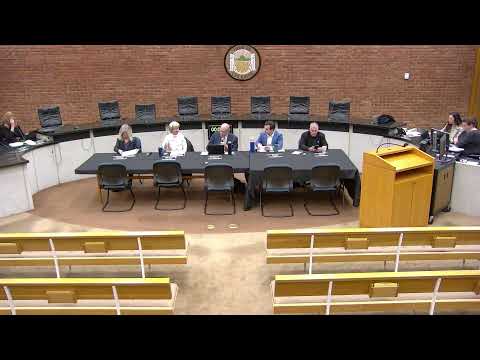
Los Gatos — The Town Council held a special meeting on Nov. 24 to interview 31 applicants for nine advisory boards and commissions and appointed the bulk of candidates that night.
Council began by outlining the evening’s process and noting that applicants would have two minutes per question under council policy. Public comment earlier in the meeting raised Brown Act concerns and urged the council to allow ample public speaking time.
Interviews and themes Council interviewed candidates for the Community Health & Senior Services Commission, the Planning Commission, the Complete Streets & Transportation Commission, the Parks & Sustainability Commission, the Library Board, the Personnel Board, the Diversity, Equity & Inclusion (DEI) Commission and the Arts & Culture Commission.
- Community health and seniors: Applicant Shyaja Venet Subbermanian told council she had cared for an elderly parent and stressed loneliness among older residents. She recommended stronger outreach to publicize existing senior services and suggested intergenerational volunteer matches (student volunteers or other community members checking in with older adults) and small design fixes such as more benches along walking routes.
- Planning and housing: Planning applicants discussed striking a balance between local character and evolving state law. Commissioners and applicants repeatedly cited constraints imposed by recent state housing laws (cited in interview discussion as Builder’s Remedy and SB9) and emphasized adopting clear objective standards and working within legal limits while seeking ways to preserve neighborhood character and manage infill projects.
- Transportation: Complete-streets candidates recommended a mix of short- and long-term measures to ease congestion, including better school-commute options (free or subsidized bus passes for students), microtransit pilots, better bike/ped infrastructure and targeted approaches to weekend beach traffic. Several applicants advocated testing ideas such as congestion pricing or negotiated routing with mapping services to reduce cut-through traffic.
- Parks and sustainability: Applicants urged proactive planning and a stronger capital and maintenance focus to support rising demand for facilities (notably courts and informal play such as pickleball), more native-plant landscaping to build climate resilience, and programming to increase equitable access for older adults.
- Library and services: Library board candidates and the incumbent on the board described a well-used library facing budget constraints. They highlighted partnerships (Friends of the Library), the need for weekend and multilingual programming, and an immediate operational challenge: nationwide supply disruptions for print materials after the library’s wholesaler went under.
- DEI and arts: DEI applicants proposed culturally focused programming (music, food, holiday recognition), youth engagement and strengthened partnerships with local nonprofits, schools and business groups. Arts and Culture candidates urged expanding performing arts, activating public-art opportunities tied to a town percent-for-art funding stream and making public art more accessible to all residents.
Appointments and next steps During the evening’s ballots the council appointed applicants to most of the open seats. The clerk read roll-call returns and confirmed a slate of appointments across the commissions; where more than one candidate was eligible for a seat, council conducted runoff ballots and filled the remaining slots. The council also directed staff to extend recruitment for two remaining vacancies — one on the Personnel Board and one on the Community Health & Senior Services Commission — with applications to remain open through Jan. 12, 2026, to allow time after the holidays for additional candidates and scheduling.
The council indicated that appointed candidates would be notified the next day. Any vacancy that opens after an appointment will be advertised for the time required by town rules before a replacement is appointed.
Why it matters The council’s decisions shape advisory bodies that inform policy on housing, transportation, parks, libraries and equity — all areas where council members, staff and applicants said the town faces choices in the coming years. Many applicants framed their remarks around the tension between local priorities and external constraints (state housing laws, regional transit policy, limited local budgets), underscoring the advisory commissions’ role in providing technical input, community outreach and program recommendations.
What’s next Councilors said they will publish appointment notices, confirm start dates with appointees and continue deliberations and outreach on the items flagged during interviews (transport pilots, park maintenance planning, library funding options and DEI partnership models). The supplemental recruitment for the two open seats will run through Jan. 12, 2026; appointed candidates were to be notified the day after the meeting.
(Reporting based on the Nov. 24, 2025 Los Gatos Town Council commission-interviews transcript.)