Get Full Government Meeting Transcripts, Videos, & Alerts Forever!
Get email alerts on the Deltopia Noise Ordinance topic
No spam. Unsubscribe anytime.
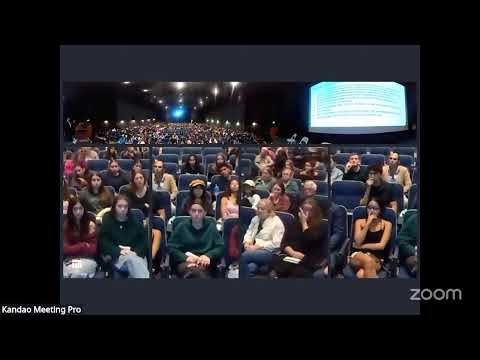
Students and residents clash over proposed Isla Vista 72‑hour music ban for Deltopia
Summary
A county proposal to impose a 72‑hour ban on amplified music during Deltopia prompted a packed Isla Vista town hall where students, residents and officials debated public safety data, the ordinance’s vagueness and alternatives such as a permitted, harm‑reduction festival.
A proposed county ordinance that would impose a 72‑hour ban on amplified music during Deltopia drew sharp criticism and competing proposals at a packed Isla Vista town‑hall meeting.
The meeting opened with Suzanne Bergen, ABC for student life at UCSD and the session’s moderator, explaining the town‑hall’s purpose: to solicit community views before the county board of supervisors takes up the item in January. Jonathan Nabude, general manager of the Isla Vista Community Services District, presented historical data showing rising crowd sizes, higher medical‑transport rates (2.76 per 1,000 in 2025) and a 15‑year public‑safety tab he said totals about $5 million, including roughly $930,000 spent in the most recent year on law‑enforcement and related services.
Why it matters: The proposed ordinance would allow county authorities to impose a 72‑hour amplified‑music ban for the Deltopia weekend and to move the timing if officials judge the event is occurring. Supporters say the restriction is intended to reduce medical emergencies, arrests and neighborhood harms; opponents warn that a vague, movable rule could expand police power and drive parties into less safe, less prepared settings.
In a five‑minute presentation, a lieutenant from the sheriff’s office described public‑safety pressures that have escalated since 2022, saying the event repeatedly strains emergency medical services and leads to arrests and hospital transports. “We see a surge of medical emergencies, increase in violent and sexual assaults,” the lieutenant said, and characterized the 72‑hour restriction as an attempt to “rebrand” the event toward a sanctioned model.
Students and campus groups pushed back. EJ Rad, external vice president of local affairs for Associated Students at UCSB, said the student government would not endorse the ordinance because it was developed without community input and risked pushing gatherings to other times or venues with less preparation. “Community initiatives are how we make Deltopia more safe,” Leanne Mezer, UCSD student‑body president, said in public comment, adding: “The noise ordinance will only put more lives in danger.” Several student leaders and campus organizers reiterated that locally driven harm‑reduction measures — free water and food, sanitation, recovery centers, Narcan and fentanyl testing — have helped avoid overdose deaths in recent years.
Residents and business owners offered a range of views. Longtime residents described recurring trash, public urination and disruptions to families, and some business owners argued for a permitted, regulated festival that sets expectations, funds medical staffing and reduces the presence of out‑of‑town visitors. Henry, a resident since 1987, said Deltopia’s problems grew once the event was amplified by social media and out‑of‑town attendees, while others, including Spencer Brandt of the Isla Vista CSD board, urged pairing neighborhood protections with one major campus concert as a channel for large crowds.
Data and enforcement: Jonathan Nabude’s presentation included raw figures for arrests, medical‑tent treatments and hospital transports; he said 57 people were treated at a medical tent last year with dozens sent to hospitals. Multiple public commenters and a deputy speaking for campus police noted that higher arrest figures can reflect greater officer presence as much as rising criminality. One student speaker pointed to 2025 as a year when “hundreds of officers from multiple agencies” were brought in and argued that increased enforcement naturally raises citation counts.
Alternatives and next steps: Across the public‑comment period, common alternatives were (1) create a permitted, sanctioned festival model with a headliner on campus and designated, staffed spaces; (2) expand harm‑reduction services and volunteer medical staffing; and (3) convene a task force of students, residents, university and public‑safety officials to negotiate a long‑term plan. Several speakers urged restoring restorative‑justice options for low‑level citations instead of broader punitive measures.
Outcome: The town hall ended with no formal vote. Officials said the Board of Supervisors will consider the proposal in January; participants were encouraged to attend that meeting to register their positions. The meeting concluded with an appeal for respectful dialogue and a request that attendees take their trash with them.