Get Full Government Meeting Transcripts, Videos, & Alerts Forever!
Get email alerts on the Land Use topic
No spam. Unsubscribe anytime.
Los Gatos planning commission continues West Valley Muslim Association hours request after hours of public testimony
Summary
The planning commission on March 25 heard several hours of pro and con testimony about a West Valley Muslim Association request to extend indoor prayer hours, particularly for Ramadan. Commissioners continued the item to a special meeting March 31 for additional review and possible conditions.
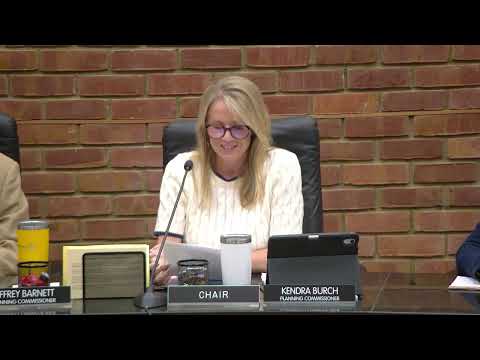
The Los Gatos Planning Commission on March 25 heard more than five hours of testimony on a request by the West Valley Muslim Association to modify a conditional use permit so the institution can hold pre‑sunrise and later nighttime indoor prayers during the year and extended nightly services during Ramadan. After lengthy questioning, technical testimony and contrasting public comments, the commission voted to continue the matter to a special meeting on March 31 at 6:00 p.m.
Staff presented the application as a narrowly focused request to change operating hours only; the project planner, Jocelyn Scheman, told the commission the proposal would not alter the building or expand occupancy and that planning staff were recommending approval subject to detailed conditions and a one‑year compliance review. Town attorney Gabrielle Wheelen summarized the governing legal standard under the town code and the federal Religious Land Use and Institutionalized Persons Act (RLUIPA), telling the commission that an applicant challenging a restriction must typically show a substantial burden on religious exercise and that any restriction must be the least restrictive means of achieving a compelling government interest.
Razi Mohiudin, the WVMA founder and the applicant, stressed that the facility footprint has not changed since the site was approved for religious assembly in 1990 and framed the request as one of timing rather than intensity. "We have not added a single square footage to the building," Mohiudin said, and described a traffic management plan, a professional noise study, ongoing outreach to more than 60 neighbors, dimmed lighting, new fences and a proposed parking reconfiguration to increase on‑site parking to roughly 200 vehicles. Mohiudin said the mosque monitors operations with volunteer traffic stewards and that shuttle service would create an undue hardship for worshippers because of the narrow time window between sunset and nightly prayer during Ramadan.
Acoustical consultant Ben Piper (Salter) testified that the study conducted for the applicant found predicted vehicle pass‑bys and measured ambient levels to be within the town's vehicle‑noise criteria. Piper added that the CUP request shifts some ingress and egress into nighttime hours but, in his view, does not increase overall daily occupancy and therefore does not necessarily raise the town's 24‑hour averaged noise metric.
The applicant and public‑safety staff acknowledged heavy, concentrated arrivals and departures during peak Ramadan nights. Mohiudin said his team counted about 280 vehicles on one of the highest attendance evenings and said roughly 200 were accommodated on site, with the remainder parked on nearby streets or on adjacent property by agreement.
Neighbors who live adjacent to the site gave extended testimony opposing the change. Several residents described repeated late‑night and pre‑dawn activity, cars parked on both sides of narrow streets, headlights and parking‑lot lighting shining into bedrooms, blocked driveways and near‑misses for pedestrians and bicyclists. "I've had to call the police and document multiple violations," one neighbor said, and others asked the commission to require permit parking, speed humps or other traffic controls before allowing any extension of hours.
Civil‑rights and interfaith groups that included the Council on American‑Islamic Relations and local religious leaders urged the commission to accommodate the WVMA under RLUIPA and to treat the proposal the same way the town treats other faith institutions. Several speakers described the mosque as an active community center that provides social, mental‑health and youth‑development programming, and urged the commission to balance neighbors' concerns with federal protections for religious exercise.
Commissioners pressed both sides on empirical details: the timing and duration of the Ramadan nightly service, the number of cars observed at peak nights, the dates and conditions covered by the noise study (Salter's monitoring occurred in late January and early February), and whether the applicant's on‑site parking reconfiguration and volunteer traffic controls had demonstrably reduced neighborhood impacts. At the close of the evening the commission voted unanimously to extend the meeting time and to continue the public hearing; no final decision on the CUP was taken.
Actions at a glance: the commission approved the consent calendar (draft minutes of Feb. 25, 2026) by roll‑call vote, and later voted unanimously to continue the Item 2 public hearing to a special meeting on March 31, 2026 at 6:00 p.m. The item remains under review and any written or technical changes submitted before the March 31 hearing will be considered by the commission.
What’s next: The planning commission will reconvene the public hearing March 31 at 6:00 p.m. to receive additional evidence and public comment before deliberating further. The town requested that residents wishing to supplement the record file any technical analyses or written comments with staff in advance of that session.