Get Full Government Meeting Transcripts, Videos, & Alerts Forever!
Get email alerts on the Transportation Project topic
No spam. Unsubscribe anytime.
Commission briefed on Peninsula Avenue corridor feasibility study and outreach plan
Summary
Senior Traffic Engineer Mr. Wong presented a planning-only feasibility and PAED study for the Peninsula Avenue corridor, outlining safety, equity and parking analyses, possible bike lanes and traffic-calming alternatives, and outreach dates on Jan. 29 (in person) and Feb. 3 (Zoom). Funding for planning totals about $1.5 million, largely covered by a highway grant.
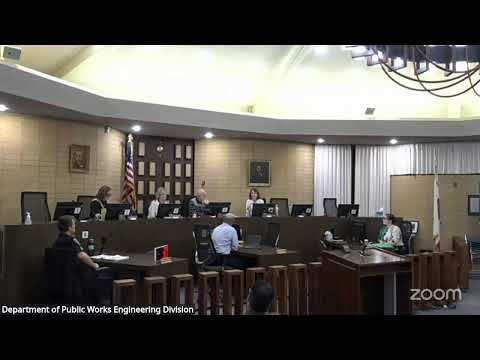
Senior Traffic Engineer Mr. Wong presented the Peninsula Avenue corridor feasibility study to the Burlingame Traffic Safety and Parking Commission on Jan. 8, describing the project as a planning and environmental (PAED) phase that will develop a preferred concept for future grant applications and later design work.
The joint study covers the corridor split between Sanonteo and Burlingame and will include traffic and congestion modeling, an alternatives analysis, safety and connectivity priorities tied to Vision Zero hotspots, an economic and equity assessment for nearby communities of concern, and a parking assessment that examines demand across multiple days and times. Mr. Wong said the study will evaluate design elements such as a Class 4 buffered bike lane, bulb-outs, raised crosswalks, midblock beacons, green infrastructure, and a possible road diet with parking impacts studied as part of alternatives analysis.
Mr. Wong said the planning phase is funded at about $1.5 million, with "a little over a million" covered by a highway grant similar to one used on a prior Old Bayshore project; the two cities will split the remaining match. He emphasized that the current work is preliminary concept planning and that a preferred alternative would be finalized before teams seek construction funding.
Commissioners focused questions on outreach, Vision Zero integration and when the commission will review design. Mr. Wong said the project will emphasize community engagement through online surveys, mailings and two upcoming outreach meetings: Jan. 29 (in person at the Martin Luther King Community Center in Sonteo, 6:30–8:30 p.m.) and a Feb. 3 Zoom session for those who cannot attend in person. He said the team will compare proposed improvements to Vision Zero priorities and other existing safety action lists to inform the alternatives.
Several commissioners urged that the commission review the project at a sufficiently mature design stage before it proceeds to council, arguing that a later (more complete) design review helps the commission determine impacts on driveways, parking and neighborhood circulation. Mr. Wong and commissioners agreed the current phase will concentrate on concept-level decisions and that detailed lane widths and construction-level design will be addressed in subsequent phases.
The commission did not take formal action on the project at the Jan. 8 meeting. Next steps include consultant selection, outreach events, data collection for the congestion model, and a future update when the preferred alternative is ready for review.