Get Full Government Meeting Transcripts, Videos, & Alerts Forever!
Get email alerts on the Municipal Code Amendments topic
No spam. Unsubscribe anytime.
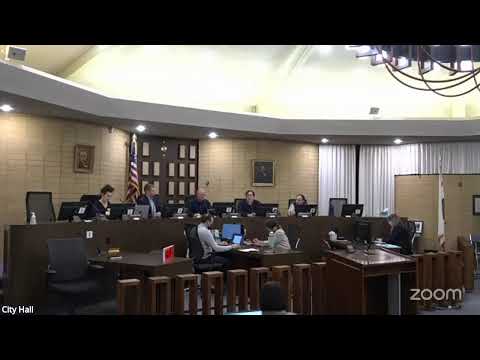
Burlingame planning commission backs broad zoning and ADU changes, sends package to City Council
Summary
The commission recommended that City Council adopt a sweeping set of municipal code amendments—aligning local rules with new ADU state laws, adding Transit-Oriented Communities policies, and clarifying view-preservation rules—after lengthy debate about setbacks, story poles and plate heights.
The Burlingame Planning Commission voted Jan. 12 to recommend City Council repeal and replace Chapter 26.32 and to adopt a package of changes to Title 25 that would implement housing-element programs, fold in state ADU law changes and add optional incentives for developers.
Director Ruben Zer, presenting the package, said the amendments bundle several objectives: "code clarifications, housing-element implementation, permit and process amendments, TOC policy and ADU state law updates," and stressed the changes were largely meant to bring the city into compliance with state rules and to create incentives for more affordable housing.
Why it matters: the amendments touch multiple areas of local housing policy. They add no-net-loss language for housing replacement, expand where SB9-style missing‑middle provisions can operate, create an incentives menu (height, setback or parking trade-offs) intended to encourage consolidated redevelopment, and change ADU/JADU rules to reflect 2025 state law—most notably clarifying when ADUs/JADUs are exempt from local parking requirements and prohibiting JADUs from short‑term rental use.
What commissioners debated: commissioners singled out eight topics for detailed discussion. They revised the view-preservation language to limit protected views to "distant views of San Francisco Bay, the San Francisco Airport and Mills Canyon from primary indoor living areas" and to explicitly exclude bathrooms, bedrooms, dens, stairwells and entryways. Commissioners also wrestled with the incentives menu—whether to allow up to a 10-foot reduction in required setbacks (with limits per setback) or to offer a parking‑reduction incentive instead. Staff said the incentives must be meaningful enough to satisfy the state housing department that they are real incentives.
Other code changes that drew comment included: - streamlining certain review procedures so some minor applications move to administrative review and so study sessions become discretionary rather than mandatory; - removing the city's design-review consultant requirement and increasing staff-led pre-application review; and - modestly increasing allowed plate height from 9 ft to 9 ft 6 in to reflect modern construction practices and the prevalence of 9'6" historic plate heights in some older homes.
Public and internal oversight: staff noted a supplemental public comment received the same day about ADU parking language; the commission instructed staff to capture the clarified ADU parking exemption in the ordinance text being forwarded to council.
Commission action and next steps: Commissioner Schmid moved to recommend repeal and replacement of Chapter 26.32 and to adopt the Title 25 amendments as revised; the motion passed by roll call. The commission's vote is a recommendation to the City Council, which must consider the ordinance for adoption. Director Zer said staff will prepare the final ordinance text and associated environmental determination for council review.
A note on process: commissioners emphasized that discretionary study sessions and story-pole requirements remain tools staff can require when projects have potential view impacts; the new language makes them discretionary during staff review but preserves the commission's ability to require them before a hearing.
What comes next: the City Council will review the revised ordinance package and decide whether to adopt the recommended changes. If adopted, the amendments will change how Burlingame regulates ADUs, condominium conversions, view preservation and a range of procedural items that affect housing production and design.