Get Full Government Meeting Transcripts, Videos, & Alerts Forever!
Get email alerts on the Open Government topic
No spam. Unsubscribe anytime.
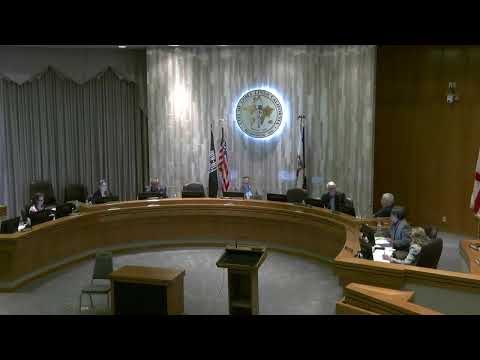
Loma Linda City workshop reiterates Brown Act duties, ethics training and conflict rules
Summary
At a joint workshop, staff reviewed Brown Act obligations, AB 1234 ethics training, conflict‑of‑interest rules and limits on council communications and social media; the session reiterated public‑comment time limits and the risk that meetings or serial communications can void decisions.
A city staff presenter told the joint meeting of the Loma Linda City Council and Planning Commission that the governing body — not individual members — is the authority for city policy and that members must follow open‑meeting and conflict rules when acting in any official capacity. "The city council as a body is the authority not individual members," the presenter said during a Brown Act and ethics workshop.
The presenter reviewed public‑comment procedures (three minutes is the usual time limit, with the mayor holding discretion to extend or shorten time when needed), the requirement for periodic AB 1234 ethics training and rules on recusal where a financial interest is foreseeable. He cited a court case in Santa Cruz, saying the city had paid legal fees and a judgment after arresting an advocate at a council meeting: "the court found that the city of Santa Cruz violated the first amendment rights ... the city spent $175,000 on the lawsuit and ended up having to pay $215,000," the presenter said.
Why it matters: The Brown Act and related state laws set the procedural baseline for how local decisions are made and preserved. Workshop participants were reminded that failure to comply can lead to voided actions, civil or criminal penalties and attorney‑fee exposure.
The session covered several practical compliance points: councilmembers should avoid off‑record serial discussions (the presenter illustrated hub‑and‑spoke and daisy‑chain scenarios), route staff direction through the city manager rather than to individual employees, and treat social‑media exchanges between members cautiously — the presenter read the code section that bars a member from responding directly to another member's post on a matter within the body's jurisdiction. Attendees were also reminded that some matters may be discussed in closed session (personnel, labor negotiations, pending litigation) but that close‑session communications remain confidential.
The presenter encouraged members to raise potential conflicts in advance so staff can provide timely legal advice. He reiterated the common standard used in practice for property‑distance presumptions (the presenter said 500 feet is a common presumption of material interest and that greater distances may be considered nonconflicting) and walked through distinctions between the Political Reform Act and contract‑conflict (1090) rules.
The workshop included Q&A from councilmembers on topics such as whether anonymous members of the public may speak (the presenter said they may), the mechanics of imposing time limits when many speakers are present and the treatment of social‑media interactions. The training closed with a procedural reminder that council direction to staff should come from a majority at a noticed meeting.
The workshop did not produce a council action; it served as guidance for officials ahead of subsequent agenda items.