Get Full Government Meeting Transcripts, Videos, & Alerts Forever!
Get email alerts on the Brown Act Commission Duties topic
No spam. Unsubscribe anytime.
City attorney briefs Public Safety Commission on duties and Brown Act requirements
Summary
City Attorney Rahi told the Desert Hot Springs Public Safety (police) Commission it is an advisory body established by the people (Desert Hot Springs Municipal Code chapter 2.40) and reviewed Brown Act rules about meeting notices, serial meetings and enforcement; commissioners asked how to handle off-agenda discussion and public comment.
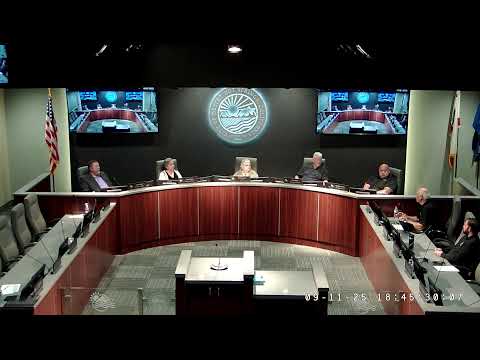
City Attorney Rahi, joining by videoconference, told the Desert Hot Springs Public Safety Commission that the body — commonly called the police commission — was established by a vote of the people and is codified in the Desert Hot Springs Municipal Code (chapter 2.40). “The police commission is an advisory body to the city council on matters concerning the funding of police services and establishing levels of law enforcement service for the city,” Rahi said.
Rahi said that because the commission was created by voters it serves in an advisory capacity and does not take final action. She urged commissioners to treat their role as recommending funding levels and program implementation to the City Council rather than adopting binding policy.
The attorney gave a primer on the Ralph M. Brown Act, California’s open‑meetings law, explaining the three meeting types and notice requirements: regular meetings (72‑hour notice), special meetings (24‑hour notice) and emergency meetings (one‑hour notice in urgent circumstances). She listed the limited subjects that may be handled in closed session — litigation, personnel, and certain real‑estate negotiations — and warned commissioners to avoid serial meetings and unintentional deliberations outside of posted agendas.
On public comment, Rahi advised there should be no back‑and‑forth that amounts to deliberation during the public‑comment period; the proper response is to thank the speaker and, if appropriate, direct them to staff for follow up. When asked about the commission’s role in reviewing the budget, Rahi said the scope is within the commission’s purview as it relates to police funding but that the original municipal language is not specific about timing or process: “I don’t know” when the commission will receive budget packets, she said, adding that staff will provide the budget information and the commission should review materials when available.
Rahi closed by reminding the commission that a more complete AB 1234 ethics and Brown Act training session will be scheduled for commissioners.