Get Full Government Meeting Transcripts, Videos, & Alerts Forever!
Get email alerts on the State Guidance topic
No spam. Unsubscribe anytime.
HCD official urges jurisdictions to use state technical guidance, clarifies limits on legislative influence
Summary
An HCD presenter described publicly available technical guidance (ADU handbooks, SB9 and surplus‑lands guidance), responses to rapid state law changes, and said HCD’s role is implementation and interpretation rather than writing statutes. Local officials asked about rural tailoring and funding linkages.
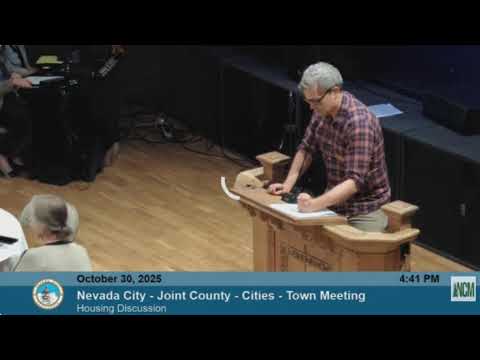
An official from the California Department of Housing and Community Development reviewed the department’s portfolio of publicly available guidance and technical assistance and told Nevada County planners the materials are intended to help local governments apply recent state housing laws.
The presenter, identified in the meeting as Lisa, described HCD’s publications — including letters, monthly digests and technical guidance on accessory dwelling units, duplex law, SB9 and surplus‑lands — and said the department is moving toward more public, searchable access to enforcement letters and guidance documents. “The letters I keep talking about are all publicly available,” she said, and added that HCD is working on a monthly digest and links that local staff can use.
Why it matters: jurisdictions across the Nevada region are confronting a wave of statutory changes and new administrative adjustments that affect how they evaluate development applications, identify sites, and certify housing elements.
Local officials pressed for clarity on how HCD defines “technical assistance.” A council member said the term is used in many ways and asked whether HCD provides help with grant applications or only with interpreting laws. The presenter responded that different HCD teams provide different services: “The teams that are working on grants ... have folks that are providing technical assistance for the purposes of seeking that funding,” she said, and offered to connect attendees to the grant teams for finance‑related questions.
Panelists also asked whether HCD attempts to influence state lawmakers as bills are drafted. The presenter said HCD’s core role is implementation: “HCD is not in a role of influencing the legislature. We leave it up to the locals and other outside parties to do that,” she said, while noting a legislative affairs division serves as a liaison between HCD and legislative staff.
Officials from small and rural jurisdictions pressed HCD on whether its guidance is adaptable to rural realities, including limited development activity and different infrastructure constraints. The presenter said many state laws apply statewide but not always in the same way, and HCD tries to provide project‑specific interpretations where a local government or developer raises questions.
What to watch: HCD plans to publish additional technical assistance materials in January–February of the next year and is working on a better public-facing portal for published letters and guidance. Officials seeking help with grant programs were advised to request contact with HCD grant teams.
Ending: The department closed with an offer to follow up and share resource links with attendees and to connect jurisdictions with the appropriate HCD staff for grant and implementation questions.