Get Full Government Meeting Transcripts, Videos, & Alerts Forever!
Get email alerts on the Utilities Rates topic
No spam. Unsubscribe anytime.
Nevada City hears sweeping water and wastewater rate proposals to shore up aging systems
Summary
Consultants told the Nevada City Council that both systems run deficits and recommended steep, phased rate increases (as much as a 65% first-year jump in one water option) plus new reserves to pay for aging pipes and a $15M+ CIP; council asked staff for more smoothing options and community engagement before starting Prop 218 notices.
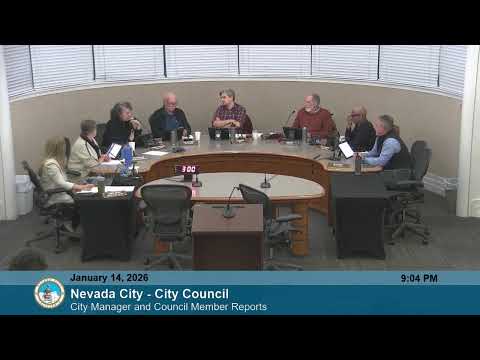
Consultants from the Rural Community Assistance Corporation (RCAC) told the Nevada City Council on Jan. 14 that Nevada City’s water and wastewater utilities are operating with thin reserves and face substantial capital and replacement costs, and they recommended multi‑year rate increases to avoid debt and fund an expected capital improvement plan.
RCAC’s presentation outlined that current water revenues from ratepayers total about $822,000 annually while the system’s operating budget and capital needs leave it in an operating deficit. RCAC said the water asset inventory has a present‑day replacement value of about $12.6 million (rising to roughly $16.4 million at replacement) and recommended annual cash contributions to an asset replacement reserve. For water, the consultants offered two options: a recommended plan that defers a portion of the CIP by one year and would raise water rates by about 65% in year one then smaller increases in subsequent years, and a pared‑down option that excludes the CIP and would raise rates by about 48% in year one. RCAC said both paths aim to reach a minimum target fund balance (operating and emergency reserves) and to keep water affordability at a “low‑risk” level under state metrics (their scenario puts affordability at about 1.0–1.4% of median household income, under the 1.5%–2.5% medium risk band).
On the wastewater side, RCAC said the system’s inventory totals roughly $13 million in current value and that future replacement costs could reach about $34 million. Consultants proposed shifting residential wastewater customers to a flat bimonthly fee and charging commercial users volumetrically with strength‑based tiers (low, medium, high strength) to reflect treatment costs. Two timelines were presented for wastewater CIP funding: a steeper three‑year front‑loading that would produce larger early rate jumps (about 35% first year) and a five‑year spread that smooths the increase (about 25% first year) but delays some reserve accumulation. RCAC recommended the five‑year spread for wastewater as a more gradual approach.
Taken together, RCAC’s recommended combination would raise the typical combined monthly bill (water plus wastewater) from about $99 today to roughly $147 under the proposed schedule. The consultants reiterated that Prop 218 rules require mailed notice at least 45 days before a protest hearing and that written protests (one per parcel) from a majority of affected properties would block adoption.
Council members voiced strong concern about “sticker shock” for residents, especially a front‑loaded 65% water increase in the recommended option. Several council members and the city attorney discussed mitigation tools: means‑tested discounts or hardship programs, monthly billing instead of bimonthly, and targeted assistance for at‑risk households. Legal counsel noted low‑income discount programs are separate from the Prop 218 rate process. Staff and council also discussed the limited availability of grant funding for non‑failing systems at present and the city’s small existing reserves (the water operating reserve was described as roughly $21,000). Council members repeatedly framed the situation as “paying for the sins of prior councils” that deferred routine increases and stressed that failing to build reserves risks future service failures.
Multiple members of the public urged stronger customer protections and clearer outreach. Jim Morris suggested facility tours to educate residents; other commenters recommended conservation incentives, tiered volumetric signals to reward reduced use, and community‑focused messaging about environmental benefits and the consequences of deferred maintenance.
Council did not adopt any rates on Jan. 14. Instead, members directed staff to return with additional rate schedule scenarios that smooth the near‑term impact while preserving the capital program, to model any limited general‑fund or internal loan options, and to develop a robust community engagement plan (including clearer bill‑impact materials) before authorizing Prop 218 notices and a protest hearing. The consultants said they would provide the required Prop 218 materials and recommended mailing notices by early April for a June hearing if the council chooses to proceed for a July 1 effective date.
What’s next: staff will work with RCAC to produce additional rate‑smoothing alternatives and a public outreach timeline. Before the council can adopt new rates the city must mail Prop 218 notices, hold a public hearing and receive fewer than majority written protests.