Get Full Government Meeting Transcripts, Videos, & Alerts Forever!
Get email alerts on the Surveillance topic
No spam. Unsubscribe anytime.
Nevada City police chief says state law restricts camera sharing with immigration authorities
Summary
Police Chief Dan told the City Council that Nevada City uses live-feed cameras (not license-plate readers), that the city controls its camera data, and that California’s SB 54 generally bars sharing local resources with federal immigration enforcement except for certain violent crimes.
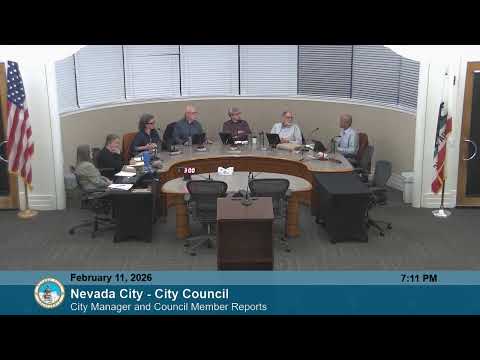
Nevada City Police Chief Dan told the City Council on Feb. 11 that the city does not use license-plate reader (LPR) cameras and that local law and policy limit sharing camera data with federal immigration authorities.
Chief Dan said Flock is a vendor name, not a single technology, and that the systems the department uses are "live feed cameras" rather than searchable LPR systems. "We do not have this technology. We are not utilizing this technology here within our city," he said, adding the city operates six cameras stationed for problems such as shoplifting and vandalism.
He described the technical and legal differences: LPRs automatically index plates and can be searched for vehicle attributes, while the city’s live feeds are time-and-date searchable and retain footage for weeks (the chief said records are typically retained for about two weeks, possibly up to 30 days). "You can't search it for any type of designators," he said of the live-feed system.
On legal limits, Chief Dan cited the California Values Act (SB 54, 2018), saying it "prohibits states and local law enforcement agencies from using resources, which would be our cameras, money or personnel for federal immigration enforcement," with limited exceptions for violent crimes. He also said the department’s vendor login shows a disclaimer officers must acknowledge before access and that officers are trained on those limits.
Asked whether federal agents could subpoena footage, the chief said a subpoena is legally possible but rare in his experience and often of reduced investigatory value for time-sensitive footage. He said he would notify the city manager and city attorney if the department were served: "I would definitely notify the city manager immediately and our city attorney and I would imagine it would come to council. Yes."
Chief Dan also described existing interagency cooperation: Grass Valley uses LPRs and has shared a hit that helped Nevada City identify a vandal; the chief said such sharing is discretionary and subject to agreements. He emphasized the department’s intent to balance public safety and civil liberties and said he consults community members before adopting surveillance technologies.
Councilmembers did not adopt new surveillance rules at the meeting; the discussion was informational. No formal policy change or vote on camera procurement was taken.