Get Full Government Meeting Transcripts, Videos, & Alerts Forever!
Get email alerts on the Public Safety topic
No spam. Unsubscribe anytime.
Council receives public safety master plan, directs staff to report back on data and costs
Summary
After a consultant presentation that outlined multi-million-dollar options for fire and police facilities, the Atwater City Council voted to receive and file the public safety master plan and directed staff to return with key performance data, funding options and implementation steps.
The Atwater City Council on September 22 received a consultant-developed public safety master plan that lays out near-term and long-term options for local fire and police facilities and operations.
Dustin Alamo of Griffin Structures told the council the plan found Fire Station 41 is outdated and lacks sufficient seismic resilience; Station 42 needs modest upgrades to support additional personnel; and a new third station (Station 43) will be required in northwest Atwater as growth continues. Alamo presented planning-level cost ranges: Station 41 renovations, about $11.6—to—12.3 million; modest work at Station 42, roughly $2.1—to—3 million; and a new Station 43 estimated at $20—to—24 million. On the police side, a targeted remodel was estimated at about $5.7 million while a comprehensive solution was estimated near $18.9 million.
The consultant also flagged staffing and space gaps: the fire department's staffing would need to grow substantially over time to maintain response standards as the city builds out, and police facilities were described as undersized for evidence storage, dispatch and ADA-compliant 911 operations.
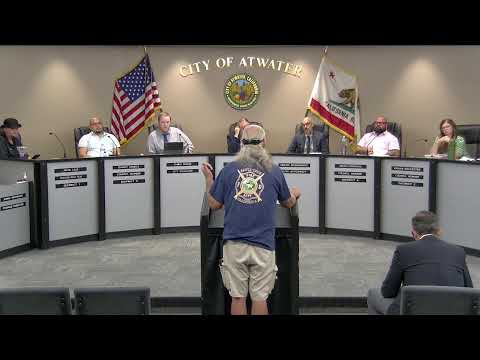
During public comment, multiple speakers questioned whether the city had received adequate community engagement during the study and criticized the consultant cost, which was cited by commenters at approximately $188,000. Commenters also urged the council to include analysis of ambulance coverage and sustainable funding sources rather than adopting an aspirational capital program without a financing plan.
Council members acknowledged the report's value as a planning document but expressed concern about adoption without further data and fiscal analysis. The council moved to receive and file the plan and directed staff to return by the end of the calendar year (if feasible) with key performance indicators, staffing analyses (including Department of Justice standards cited in the discussion), funding options and a recommended implementation schedule. The motion passed on a recorded council vote.