Get Full Government Meeting Transcripts, Videos, & Alerts Forever!
Get email alerts on the Emergency Services topic
No spam. Unsubscribe anytime.
American Medical Response outlines rollout as Merced County’s new 911 ambulance provider
Summary
AMR officials told the Atwater City Council they began providing ambulance service for Merced County in January, bringing 26 new ambulances, an out-of-county dispatch center in Salida, upgraded equipment and a nurse-navigation program intended to divert lower-acuity 911 calls.
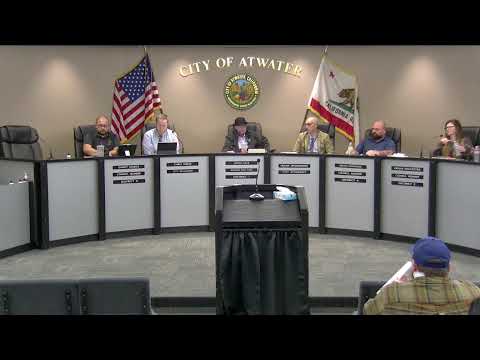
American Medical Response representatives briefed the Atwater City Council on Feb. 23 about their early operations as Merced County’s new 911 ambulance contractor.
Daniel Inigis, AMR’s regional director, said the company assumed service in January after a compressed implementation period and has already added ambulances, equipment and personnel. “We are American Medical Response,” he told the council, describing AMR as a national firm that will run locally and provide advanced life support, critical care transport and basic life support services.
Inigis said AMR deployed an implementation team and a local operational staff and has purchased a new fleet. He described equipment upgrades including LifePak 35 cardiac monitors and full autoload gurneys and said AMR has committed to working closely with hospitals, fire departments and the county EMS agency.
Rich Silver, AMR director of communications, outlined the dispatch and posting approach AMR is using. He said AMR operates a dispatch center outside Merced County in Salida and that the center typically staffs 11–15 dispatchers with one supervisor. Silver described a dynamic post map driven by CAD data that shows where ambulances are posted based on call volume and travel times.
AMR described a nurse-navigation program—staffed by licensed nurses in a separate, remote center—that can route certain low-acuity 911 calls to alternate care options such as urgent care, pharmacy trips or ride services, while preserving the caller’s right to request an ambulance. AMR said the system can reduce ambulance dispatches for qualifying low-acuity calls by roughly 10–13% in other service areas.
Council members asked whether the new dispatch center employs local residents and whether incumbent staff were offered positions; AMR said it offered positions to the incumbent workforce and “I think we have 98% of those people came,” and that many local paramedics, EMTs and dispatchers moved to the new contractor. AMR also agreed to provide operational statistics and said it reports monthly and can provide a six-month performance update for local stakeholders.
Next steps: AMR said it will continue local outreach, report performance data, and brief the community at a planned AMR meet-and-greet on March 10. The council requested regular performance reports on call times and system impacts.