Get Full Government Meeting Transcripts, Videos, & Alerts Forever!
Get email alerts on the Local Government topic
No spam. Unsubscribe anytime.
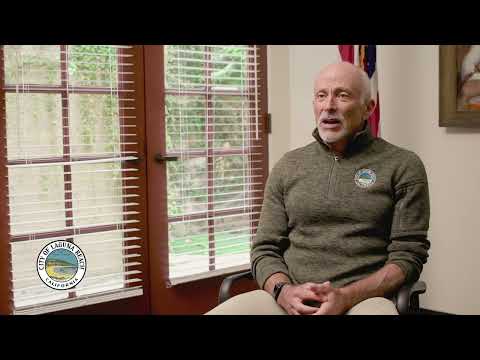
Laguna Beach city manager Dave Kiff outlines priorities: tackle rising public-safety costs, invest in aging infrastructure
Summary
City Manager Dave Kiff said Laguna Beach must address rising public-safety costs that now take up roughly 60% of the budget, boost wildfire preparedness and invest in century-old streets and sidewalks over the next decade.
Dave Kiff, the City Manager of Laguna Beach, said he returned from retirement to lead the city and outlined immediate priorities including addressing rising public‑safety costs, strengthening wildfire preparedness and investing in aging infrastructure.
Kiff, who told listeners he has lived in Laguna Beach about 24 years and has been city manager for roughly a year and a half, said the city is a "full‑service" municipality with its own police, fire and marine safety departments. "We have our own police department, we have our own fire department, we have our own marine safety department," he said.
Why it matters: Kiff said public‑safety accounts for a disproportionately large share of city spending and that the city must compete with neighboring jurisdictions for staff. "That's about 60% of our budget, if not more," he said, and later added that public‑safety costs have "probably nearly doubl[ed]" over the past decade. Those pressures, he said, are driven by labor-market competition, increased visitor demand and investments needed for wildfire response.
Kiff described the operational challenge of serving a small permanent population that swells during busy seasons. He noted Laguna's roughly 25,000 daily residents must be served while the city also manages "hundreds of thousands of people a day on busy seasons," placing atypical demand on police and other services.
On staffing, Kiff said the city must offer competitive salaries and benefits to avoid churn and retain employees who learn the community and build institutional knowledge. "When you look at trying to stay competitive, you need to provide a competitive salary and benefit package," he said, adding the goal is to keep employees who "get to know the community and the community who gets to know them."
Infrastructure needs: Kiff urged greater near‑term investment in capital repairs. He said some town infrastructure is about 100 years old and requires reconstruction and seismic upgrades. "Our buildings are getting old, our streets are getting old, our sidewalks are getting old," he said, calling for work over the "next 10 years" to bring facilities up to contemporary standards.
Wildfire readiness and technology: Kiff highlighted investments in technology and response capabilities as critical to wildfire preparedness in Laguna Beach. He emphasized staying "on the cutting edge of technology and response when it comes to wildfire because that's essential here in Laguna to make sure we're ready for and prepared for the next wildfire."
Economic development tie‑in: Kiff connected infrastructure improvements to economic health, specifically naming downtown sidewalks and streetscapes as important to maintain local commerce. He said upgrading those elements supports the economic development Laguna Beach needs.
Next steps: Kiff framed these priorities as the focus for city leadership and future budgeting but did not announce formal proposals, timelines or funding mechanisms during his remarks. No motions or votes were recorded in the remarks.