Get Full Government Meeting Transcripts, Videos, & Alerts Forever!
Get email alerts on the Parking Permit Pilot topic
No spam. Unsubscribe anytime.
Compton residents press council to pause, revise Richland Farms permit parking; council schedules workshop
Summary
Residents of Richland Farms urged the Compton City Council to suspend enforcement of a permit-parking pilot, arguing the ordinance was poorly implemented and creates unfair fees and enforcement practices; council agreed to return the matter for a public workshop and consultant briefing but staff said enforcement remains in effect until the council takes action.
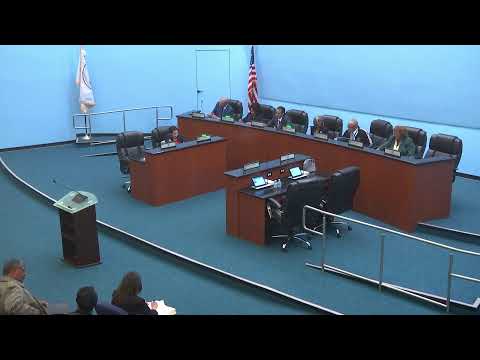
Residents of the Richland (sometimes called Richland/Richmond) Farms neighborhood packed the Compton council chamber on Feb. 24, pressing the City Council to suspend or substantially revise a preferential permit-parking pilot they say was rolled out without proper notice, inconsistent enforcement and inadequate community input.
Several residents said the program is being enforced 24/7 in their neighborhood despite public expectations of limited hours. Speakers described confusion about permit sticker placement, ticketing of vehicles parked in front of their own driveways and the reduction of free events and guest permits compared with earlier versions of the ordinance. Some described enforcement as a disproportionate burden on residents who rely on family gatherings and said permit fees and reduced event allowances effectively make family gatherings costlier.
What residents asked: Multiple commenters asked the council to (a) pause enforcement until the city performs a citywide parking analysis and holds a dedicated, well-advertised public workshop, (b) restore or expand the number of event permits and/or remove event restrictions tied to the pilot, (c) lower or eliminate the permit fees and (d) clarify boundary maps and resident counts used to justify the pilot. Several residents urged the council to publish non-enforcement days and provide mailed notices to the community before implementation.
Council response and next steps: Staff presented a set of options (time-of-day parameters, Monday–Friday vs. 7-day enforcement, event-permit rules) and recommended the council hold a focused workshop with the project consultant present before finalizing any ordinance change. Multiple council members pressed staff to make materials publicly available (website and paper copies) and to convene the workshop as soon as possible; one councilmember specifically asked that the consultant be present. Staff told the chamber the program remains in effect while council considers next steps — a point several residents criticized as undermining the request to pause enforcement.
Enforcement issues raised on the record: Residents cited inconsistent messaging from staff and frontline enforcement officers (for example conflicting instructions about whether permit stickers belong on front or rear windows and variable officer verification practices), a suspect public-notice process (mail vs. hand-delivery) and unclear denominator counts (how many residences fall in the pilot area). One resident said he had multiple citations for alleged sticker misplacement despite a valid permit; others reported tickets for cars returned after the street sweeper had passed.
What the council asked staff to do: Provide the community with the staff memo/options document in accessible formats, make the consultant available at a workshop (the city manager proposed doing the workshop before taking final ordinance action), consider enforcement hours that would ease burdens (examples discussed included 7 p.m.–7 a.m. enforcement windows or focusing on weekdays), and return with an action item after collecting public input.
Representative quotes: “The residents need to be looking at the same paper that we’re looking at,” said one councilmember asking for broader transparency. A Richland Farms resident said, “We are very close to 50% plus one of our community that does not want the parking permit.” City staff told the chamber the document on enforcement alternatives is for the council’s discussion and urged public review.
Bottom line: The council did not repeal or pause the pilot; instead it scheduled more deliberation, asking staff to post recommended options and hold a workshop with consultant participation so the council can adopt a clearer, better-noticed policy if it chooses. Enforcement remains active until the council acts further.