Get Full Government Meeting Transcripts, Videos, & Alerts Forever!
Get email alerts on the Homelessness topic
No spam. Unsubscribe anytime.
Hopics outlines homeless services expansion in Compton, warns of county budget shortfall
Summary
Hopics told Compton City Council it now operates a local access center and multiple interim and permanent housing sites and asked the city to consider funding support for the Compton Access Center after a one-year HUD grant ends in June; Hopics cautioned that Los Angeles County's new HSH department faces a multi-hundred-million-dollar shortfall in July that could force funding cuts.
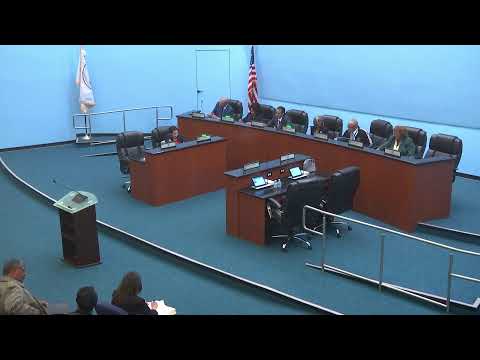
Hopics, the lead homeless services provider for parts of South Los Angeles, told the Compton City Council on Feb. 24 that it now operates an on-the-ground continuum of services inside the city — from street outreach to access-center triage, interim (shelter) placements and permanent supportive housing — and asked the city to consider municipal support for its one-year HUD-funded Compton Access Center when that grant ends in June.
In a presentation to the council, Ben K., an associate director at Hopics, said the nonprofit served more than 16,000 people across its service area in the most recent fiscal year, actively enrolled roughly 5,000 individuals and supported about 1,300 exits into permanent housing. He said the Compton Access Center, which opened Sept. 15 at 1730 East Compton Boulevard, has screened 171 people and referred 82 into interim housing since opening.
Hopics’ program managers and site leaders described a range of local operations: Antoine Wilson detailed street-based outreach teams and specialty case managers who bring mental health and medical support directly to clients; Madros Lopez said the Compton Access Center has screened 78 families and referred 29 into interim housing; and Chrisman (Chris) Oliver outlined Project Homekey conversions that created family interim housing (Lemon House, 40 units; Cherry House, 26 units) and a 40-unit permanent supportive housing site called Hub City, which Hopkins staff said currently has 31–32 residents and most units leased.
Why it matters: Hopics told council it is confident most of its Compton programs will have funding when the county’s new Department of Homeless Services and Housing (HSH) begins rolling contracts on July 1. But presenters warned the county faces a “couple hundred million” dollar deficit that will force prioritization and cuts beginning in July; Hopics said the Compton Access Center specifically relies on a one-year HUD grant that expires in June and that it would welcome a city funding conversation to sustain that site.
Hopics described the operational pathway it uses to move people from unsheltered situations toward stable housing: outreach teams identify and engage individuals on the street, refer to access-center triage, place appropriate clients in interim non-congregate shelter while offering integrated medical and behavioral supports, and then work toward permanent supportive housing with wraparound case management. Presenters said the organization aims to keep clients connected to Compton when possible because many clients want to remain in their home communities.
Council response and next steps: Council members asked several operational questions — whether the numbers cited applied to Compton residents (Hopics said they did for access-center stats), how outreach referrals are triggered (Hopics cited sheriff referrals, LA HOPs tickets and constituent reports), and which programs face funding risk (Hopics repeated that the Compton Access Center is still seeking a longer-term funding partner). City staff and Hopics agreed to continue conversations about local support. Hopics left contact information for follow-up and asked the city to consider funding the access center after the HUD grant ends in June.
What Hopics said (representative quotes): “We are here today to present on our organization and some of the work that we are now doing fully in the city of Compton,” said Ben K., associate director, and Antoine Wilson added that their outreach teams “come with different specialty services” including clinicians and nurses who work from mobile vans. On funding risk, Hopics said the county HSH rollout “begins on July 1” and that “there is a significant deficit countywide” that will require funding prioritization.
Bottom line: Hopics has expanded an on-the-ground presence in Compton — access center, interim shelters and permanent supportive housing — and seeks a city funding conversation to sustain the small, HUD-funded Compton Access Center once that one-year grant expires in June. Council members pressed staff for follow-up and said they would continue discussing funding options.