Get Full Government Meeting Transcripts, Videos, & Alerts Forever!
Get email alerts on the Environmental Health topic
No spam. Unsubscribe anytime.
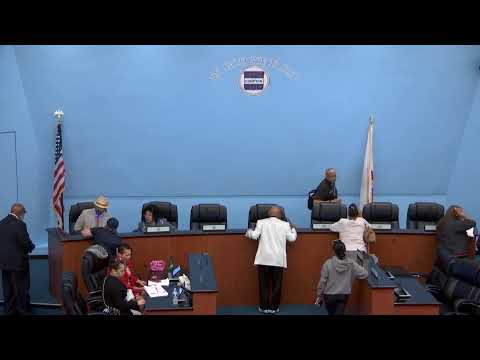
Nonprofit seeks access to former Alondra landfill for community projects as residents warn of contamination
Summary
Connecting Compton told the council the site-access agreement for the former Alondra landfill is necessary to conduct environmental review for an aquatic and equestrian project; several residents warned of daily gas releases, historical contamination and safety concerns that must be addressed.
Connecting Compton urged the Compton City Council to approve a site-access agreement for the former Alondra landfill so the nonprofit can conduct environmental review and due diligence for a proposed Multicultural Aquatic Center and equestrian programming.
Hector Gomez, co-founder and executive director of Connecting Compton, told the council the access agreement is "an important first step" because it will allow the organization to properly understand the site and "responsibly plan for its future." Daniel Zapeda, a co-founder of the nonprofit, repeated that the agreement would enable transparent study of the site's conditions and partnership development.
Multiple residents and speakers urged caution. Mark Smith said he had video suggesting daily releases at the site and called conditions "totally unsafe," and other attendees cited past soil contamination at nearby facilities and questioned whether more intrusive uses (for example, equestrian centers or development beyond a park) would be appropriate without full remediation. One speaker said the EPA previously limited some uses and that public-health protections should guide next steps.
The access agreement was listed on the consent agenda (Item 1) and was pulled by the council for separate consideration earlier in the meeting. Staff and community speakers emphasized that the site-access agreement itself would allow environmental sampling and mapping to inform future planning; several residents said the city should prioritize public-health data and transparent reporting before approving major development proposals.
Council did not make a final land-use determination in the March 24 meeting; instead, the discussion focused on whether to allow access for study and how to ensure transparency about risks, remediation and future uses. City staff indicated they would share findings and next steps as environmental review progresses.