Get Full Government Meeting Transcripts, Videos, & Alerts Forever!
Get email alerts on the Emergency Services District topic
No spam. Unsubscribe anytime.
Task force urges election to form Emergency Services District to secure local EMS funding
Summary
A task force recommended forming an Emergency Services District (ESD) to provide dedicated funding for EMS and fire after vendors said operating costs would far exceed current subsidies; the city council voted unanimously to continue working with the county to pursue an ESD election.
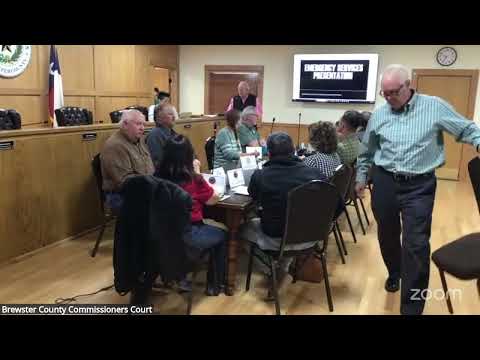
Mark Rose, chair of the task force on emergency services, told a joint session of the city council and commissioners court on March 17 that the group unanimously recommends asking voters to create an Emergency Services District to secure stable funding for local emergency medical services and fire protection.
“We either don't have an EMS service for the community,” Rose said, warning that the community faces a gap in coverage if a sustainable funding vehicle is not created. He said the subsidy that has supported services in recent years (about $350,000) no longer covers realistic operating costs and that vendors indicated a practical operating floor in the roughly $900,000 range.
The task force presented two main options: the city and county could jointly run EMS under local government control, a path that would likely require raising taxes through voter approval and could be vulnerable to budget cycles and leadership changes; or the jurisdiction could ask voters to create an ESD, a political subdivision that would levy a property tax dedicated to fire and EMS.
Jessica, the task force presenter, summarized the ESD option’s mechanics and trade-offs, saying the district would be locally controlled, independent of annual city and county budget cycles, and legally limited by a 10-cent maximum tax rate. Under state law, Rose explained, an ESD is a political subdivision with a five-member board appointed by the county and subject to open-meeting and open-records rules.
The task force’s cost analysis relied on responses from multiple vendors and internal modeling. Officials said a third-party vendor baseline averaged about $984,000; standing up an internal unit at a premium level could reach roughly $1.5 million. The task force estimated that ambulance-billing revenue could bring in about $300,000 annually, reducing the net cost borne by the taxing entity.
The group also outlined the steps required to pursue an ESD: a citizen petition of at least 100 signatures would be required to prompt county consideration; a county-run election would likely place the question on the November ballot; if approved, the district would be authorized to levy a property tax (up to the statutory cap) with revenue dedicated to emergency services.
Alan Haley, a Marathon resident and task force member, reported strong local support in Marathon and said the Marathon Volunteer Fire Department is backing the proposed district as a way to improve response times and sustain local volunteer capacity. The task force said the hospital district can help with capital purchases such as ambulances but is not positioned to take over daily EMS operations.
After discussion and a brief procedural motion, the council voted unanimously to continue working with the county to pursue the task force’s recommendation and to support the steps necessary toward forming an ESD, including community education and the signatures-gathering phase. No final election call was made at the meeting; the motion advanced the task force’s work toward the citizen-petition and public-hearing steps required by law.
Next steps identified at the meeting included organized petition gathering, continued public education and preparing a transition plan so a newly created board would have policies and early work products if voters approve the district.