Get Full Government Meeting Transcripts, Videos, & Alerts Forever!
Get email alerts on the Streetscape topic
No spam. Unsubscribe anytime.
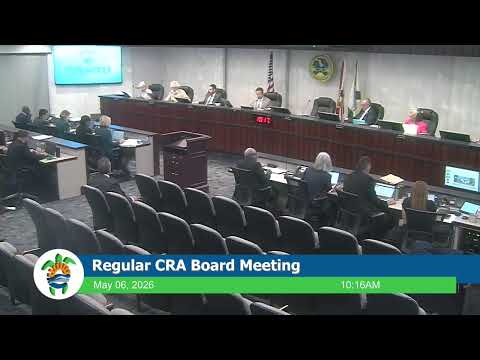
Hollywood CRA board debates Phase 4 streetscape tree and planter approach
Summary
The Hollywood CRA board heard a presentation on Phase 4 streetscape plans for A1A and directed staff to explore canopy-tree options (pigeon plum or buttonwood), irrigation, planting soil specifications, decorative ground cover and edging to improve maintenance and curb appeal.
The Hollywood Community Redevelopment Agency board on May 6 received a detailed presentation on Phase 4 of a streetscape project along A1A (Hollywood Beach Boulevard South to Hallandale Beach Boulevard) and directed staff to explore alternative canopy trees, improved planting specifications and maintenance measures.
Jonathan Hague of Kimberly Horne Associates presented the design for Phase 4, which calls for 3-by-4-foot surface planters placed only where sidewalks are at least 7 feet wide, leaving a minimum 4-foot passing space behind each planter. "This will give us a 4 foot passing space minimum at the backside of the planter," Hague said, describing palm species selected for the phase and a pattern of decorative pavers and new light poles set back from the planters.
Board members pressed staff on durability and maintenance. "Is there irrigation planned for these tree pits?" one commissioner asked. Hague confirmed irrigation will be provided and said ground covers would be limited to low-growing, salt-tolerant types maintained about 18 inches high. He also said the design raises root balls about 10–12 inches compared with the previous phase to improve survival.
Several commissioners urged staff to consider hardwood canopy trees to add shade and curb appeal, rather than reusing palms that previously died in some locations. Board member Hernandez proposed exploring pigeon plum or silver buttonwood; the board debated DOT clearance and trunk-size limits that require 14-foot overhead clearance. Justin Rogers, the project's attending arborist, said pigeon plum is an option but may require additional pruning and structural soil solutions to avoid dislodging pavers: "Pigeon plum is a relatively small growing tree ... but next to a paver walkway, you're probably gonna have more dislodging of pavers, from the roots of a hardwood tree than from a palm tree," he said.
Commissioners also pressed for better soil specifications and drainage in the pits. Hague said prior destructive site work recommended a gravel drainage layer and that the contractor will be required to install soil amendments and follow planting specifications. Board members asked staff to explore warranty or lease-style maintenance programs with nursery vendors so dead trees can be replaced without repeated cost to the CRA.
After an extended exchange the board gave three specific directions to staff: to discuss introducing canopy-tree options with the Florida Department of Transportation and report back on feasibility; to prioritize flowering or decorative ground cover where durable options exist; and to research edging/coping options for tree pits that would reduce weed creep and improve the finished appearance. Staff said they will return with written follow-up after consulting FDOT and vendors.
The discussion was framed as guidance rather than a binding change to the contract drawings; staff emphasized that some features will require FDOT approval because the work affects the state right-of-way.