Get Full Government Meeting Transcripts, Videos, & Alerts Forever!
Get email alerts on the Public Health topic
No spam. Unsubscribe anytime.
Santa Cruz County reports lower fentanyl deaths as opioid settlement funds support treatment and prevention
Summary
Health and sheriff officials told the Board of Supervisors the county has received $11.25 million in opioid settlement funds and credited a coordinated response with a decline in fentanyl deaths; supervisors accepted the report and asked for more outcome measures in future updates.
The Santa Cruz County Board of Supervisors on March 24 received an update on the county’s use of opioid settlement funds and on local efforts to reduce fentanyl‑related deaths.
Health Services Agency Director Connie Moreno‑Peraza and Behavioral Health staff told the board the county has received $11.25 million in opioid settlement revenue to date and expects about $29 million through the final distribution year, with annual receipts declining over time. "To date, the county has received 11.25 million dollars in opioid settlement funds," the presentation stated, and staff said the funds are being allocated to expand treatment access, prevention for youth and recovery supports.
Why it matters: county leaders said the money is being used to build capacity — medication‑assisted treatment (MAT), residential treatment and recovery residences — rather than to underwrite ongoing general operations. The county reported $2.7 million spent and $8.5 million obligated for future budgets; staff warned obligated funds are not discretionary and will be used to bridge revenue declines in later years.
Sheriff’s Office staff described a multidisciplinary, data‑driven Fentanyl Crisis Response Team and an Overdose Death Review Board that review cases and propose operational changes. The sheriff’s presentation noted positive trends: "this last February was the first time we've had zero overdose deaths related to fentanyl, uh, since 2021," a sheriff's office presenter told the board, and officials credited expanded Narcan distribution, prevention education, fentanyl testing supplies and targeted enforcement.
Questions from supervisors focused on measurement and sustainability. Supervisor Koenig asked which interventions were most effective; presenters cited widespread Narcan distribution, rapid access to MAT, fentanyl testing and collaboration with community providers. Several supervisors asked staff to develop more outcome‑based measures — for example, how many people move from short‑term treatment into long‑term maintenance, and standardized outcomes across funded programs.
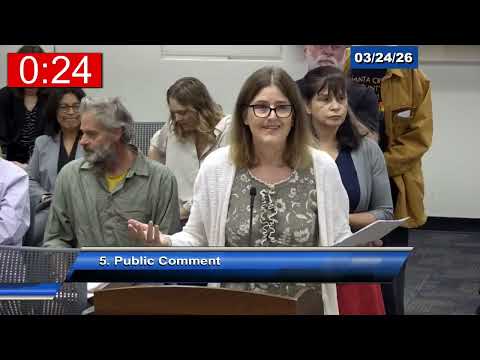
The board accepted the report by a 5–0 vote after the presentation and public comment. Staff said they will return with refined metrics to track both access (capacity) and effectiveness (outcomes) in future updates.
The board’s next step: staff will continue administering the opioid settlement charter, refine outcome metrics for future reports and pursue grant and program alignment to sustain treatment and prevention work as settlement revenue declines.