Get Full Government Meeting Transcripts, Videos, & Alerts Forever!
Get email alerts on the Building Code topic
No spam. Unsubscribe anytime.
Commissioners debate adopting Kentucky building code; residential rollout urged to be delayed
Summary
Carroll County fiscal court debated adopting the Kentucky building code, with members urging separation of commercial and residential provisions or a delayed residential rollout to allow public education and address fee/logistics concerns.
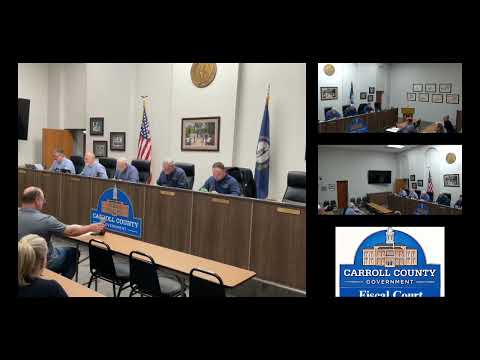
Carroll County’s fiscal court spent an extended portion of its March 24 meeting debating whether to adopt the Kentucky building code, with several members urging caution before applying residential requirements that would broaden permit obligations for homeowners.
A committee member voiced the central concern: adopting the state code “also includes single family dwellings,” and that would expand required permits to finishing basements, interior renovations, decks, accessory buildings over 120 square feet and even backyard pools. The commissioner said the change would be “a major change” for a county long accustomed to looser rules and proposed separating commercial inspections from the residential code or delaying residential enforcement for several months to allow for public education and administrative preparation.
Officials flagged three operational questions: contract-inspector roles, fee collection logistics, and continuity with existing contracts. The court discussed the role of a contracted inspector, identified in the record as Matt Dunaway, and noted the need to coordinate with the county treasurer so fee receipts are auditable. One speaker warned that if the building inspector collected fees directly, “he is supposed to keep 90% of the fee and 10% is supposed to come back to the county,” creating a bookkeeping requirement that the county must clarify.
Several members emphasized the practical effect on residents and local contractors. A commissioner described a resident who wanted to put up a greenhouse kit and was concerned it could become subject to the new permitting regime. Others noted that electrical-inspection contracts already exist in the county and that any ordinance should respect those contracts.
The court concluded that the item required more work and moved to table the ordinance for further study and a work session that would include the contracted inspector and county staff to address logistics, exemptions, and public outreach. The motion to table was made on the floor and carried (voice vote; tallies not specified). The court did not adopt the building-code ordinance on March 24 and directed staff to prepare further information for a future session.