Get Full Government Meeting Transcripts, Videos, & Alerts Forever!
Get email alerts on the Waste Management topic
No spam. Unsubscribe anytime.
Northwest towns press to keep Torrington transfer station public as private firms offer alternatives
Summary
Local officials urged the Government Oversight Committee to convey the Torrington Transfer Station to a newly formed Northwest Resource Recovery Authority, saying public ownership would preserve competition and control long-term costs. Private haulers and some municipal managers warned the move could raise costs or require subsidies unless revenue streams are secured.
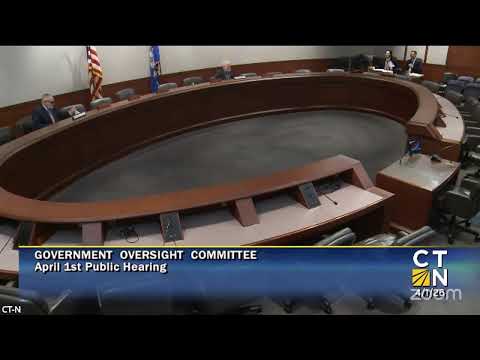
Torrington — Dozens of municipal leaders and local officials on Wednesday urged Connecticut’s Government Oversight Committee to transfer the state-owned Torrington Transfer Station to a newly formed Northwest Resource Recovery Authority (NRA), arguing the conveyance is the only practical way for northwest Connecticut to preserve a public option for solid-waste disposal.
Advocates including Joe Canino, a regional official from the northwest corner, said the transfer would protect small towns from a market that is “boxed in” between neighboring states and vulnerable to consolidation. “Our constituents have already paid for this asset,” Canino testified. “Our land was taken by the state. It’s time to hand it back,” he said, urging the committee to preserve a public facility that can periodically rebid operations to maintain competitive tipping fees.
Supporters said a publicly owned transfer station would allow regional governments to run open, competitive requests for proposals for operations, rather than ceding control of both infrastructure and hauling markets to a single private company. Rrista Malanka, director with the Northwest Hills Council of Governments, said the NRA could administer competitive contracts while preserving public oversight and noted grant funding and administrative support already committed to the effort. Dan Jerham, chair of the NHCOG, framed the proposal as a long-term regional collaboration that could keep disposal costs stable and protect small haulers’ access to transfer capacity.
Private haulers, however, urged the committee to reject a no-cost public conveyance and to instead sell the facility to an experienced operator. Jonathan Murray of USA Waste and Recycling said private firms can operate the site immediately with trained staff, established equipment and lower short-term rates, and that a private sale would also generate tax revenue and an immediate payment to the state. “We bring the staff, the equipment, the infrastructure and the experience to step in and run facilities effectively from day one,” Murray told the committee.
Legal and financial consultants pressing the private-sale case also cited MIRA/CRA’s troubled history and warned that public ownership has previously required large reserve subsidies. Attorney Edward Spanella told the committee that historical public boards used reserve funds to suppress fees, which later left big deficits. He said independent appraisals and RFIs his clients have seen show public operation proposals with higher projected tipping fees than private proposals, and urged careful valuation and written commitments before any zero-cost conveyance.
Municipal managers and regional transfer operators added nuance: several testified that a public authority can succeed if it secures diverse revenue streams beyond tipping fees — for example, cell-tower leases, recycling revenue, composting and value-added services. Paul Harrington, formerly the finance chair for MDA and now a regional manager, said transfer stations cannot survive on tip fees alone and pointed out operating shortfalls reported in recent MDA budgets. “Without diverse revenue streams they operate at a loss,” he said.
Hus atonic Resources Recovery Authority executive director Jennifer Heaton Jones told the committee the hybrid public-authority model can work: municipal ownership of facilities combined with competitively rebid private operators has allowed her authority to sustain low tip fees and to reinvest in diversion programs. “Public ownership does not mean public operation,” she said, describing contracts and rebid cycles that preserve competition while keeping oversight.
Committee members pressed both sides for concrete numbers. Several lawmakers asked the NRA and opponents alike to produce five- and 10-year pricing scenarios showing the total cost to towns, including recycling and transport — not just a single per‑ton figure — before committing public title to the site. Rep. Vale said she was “not convinced” without more financial detail and warned against rushing a conveyance on a tight statutory timeline. NRA supporters countered that they cannot finalize long-term pricing until they have title or firm commitments from member towns about tonnage and service scope — a circular problem the parties asked the committee to help break.
Of particular urgency: DAS has notified towns it will not operate the station beyond a near-term deadline unless a public or private operator stands ready to continue services. Witnesses said that if the transfer station closed, towns would face immediate disruptions and long trucking trips to more distant facilities, with higher costs and logistical strain for rural municipalities.
The committee did not vote at the hearing. Members requested written follow-up: formal appraisals referenced in testimony, the DAS position in writing, the RFIs and proposals submitted to the NRA, and modeled 5‑ and 10‑year total-cost scenarios that include transportation and recycling. The NRA said it would supply revised projections if the committee allowed additional time to collect firm commitments from towns and to complete competitive procurement steps.
What’s next: the hearing record will stay open for those materials. The committee signaled it will weigh the public-authority model’s potential to preserve competition and long-term choice against private-operator proposals that promise immediate capacity and lower near-term prices. The committee’s members explicitly requested durable, written commitments on pricing and ownership terms before considering any no‑cost transfer of the facility’s title.