Get Full Government Meeting Transcripts, Videos, & Alerts Forever!
Get email alerts on the Land Use topic
No spam. Unsubscribe anytime.
Council Upholds Approval for Skyhawk Recovery Center After Hourslong Hearing
Summary
After a daylong, often emotional hearing, Santa Rosa's council voted to deny two appeals and uphold the Planning Commission's approval of a 24-bed Pure Vita recovery facility at 5761 Mountain Hawk Drive. Opponents cited neighborhood intensity and evacuation concerns; proponents stressed urgent treatment need.
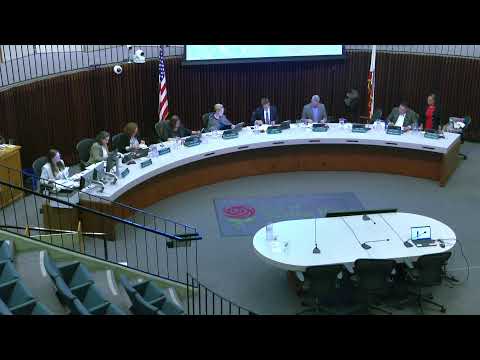
Santa Rosa's City Council on March 25 upheld a Planning Commission decision to approve a 24-bed community care facility for addiction treatment at 5761 Mountain Hawk Drive, rejecting two appeals after a multi-hour public hearing.
The project would convert seven existing residential units above a commercial center in Skyhawk Village into non-medical residential addiction treatment housing. Planning staff told the council the proposal complies with zoning and General Plan 2050, and that the project was analyzed under CEQA exemptions for infill and consistency with an adopted plan. The Planning Commission approved the minor conditional use permit in November by a 4-2 vote; two appeals followed.
Opponents, organized as Skyhawk United and joined by dozens of neighborhood residents, told the council the site is the wrong place for an expanded facility. David Chen, spokesperson for Skyhawk United, said the project would transform a neighborhood-serving shopping center into “a regional institutional hub,” and raised safety and evacuation issues because the building sits near Highway 12 and school walking routes. Appellants and several nearby homeowners also pointed to experience at an existing Pure Vita location and at neighboring sites where they said smoking, litter and parking strains occurred and argued the intensity (from six beds to 24) would change the character and function of the commercial center.
Supporters — including family members, recovery clinicians and nonprofit partners — said the center provides carefully supervised, voluntary residential care that is already operating in Santa Rosa and that removing or restricting access would punish residents who are trying to get well. Alex Wignall, one of the owners, said staff supervise residents 24 hours a day, the operation is licensed and accredited, and that clients who need additional activities will travel by staff transport to a nearby program site for day programming. Medical director Dr. Rod Fontinet told the council the facility provides residential-level care; clients are ambulatory and would be screened for suitability before admission.
Fire department staff and the city's engineers also weighed in. Fire Chief Paul Loenthal said the area is part of the city's mapped wildland-urban interface but noted the city is updating WUI boundaries and that an evacuation analysis had been incorporated in staff review. The police department reported few calls for service tied to the operator's existing local sites.
Council members debated the competing priorities: neighborhood character and evacuation risk versus the documented local need for treatment capacity and the provider's record. Vice Mayor Krepky moved to deny the appeals and uphold the Planning Commission, a motion seconded by Council Member Rogers. After discussion, the council voted 6-0 (Council Member McDonald recused) to deny the appeals and preserve the Planning Commission's approval.
The motion: deny the appeals and uphold the Minor Conditional Use Permit allowing the 24-bed community care facility at 5761 Mountain Hawk Drive. Vote: Rogers — yes; Fleming — yes; Benuelos — yes; Alvarez — yes; Vice Mayor Krepky — yes; Mayor Stepp — yes. Outcome: approval of the permit upheld.
What happens next: The permitted use will operate under the conditions set by staff and the Planning Commission, including limits on admissions, staffing, and a requirement to comply with city noise and zoning rules. The city's decisions are based on the administrative record and the findings required for land-use approvals; opponents had argued the findings lacked substantial evidence on neighborhood compatibility and evacuation analysis, but the council concluded the record supported the approval.
Why it matters: The Pure Vita case is part of a broader conversation about locating behavioral-health treatment in mixed-use urban settings. Supporters say placing care inside communities reduces barriers to entry and helps families; opponents warn of impacts on parking, neighborhood character and, in some locations, evacuation complexity. The council's vote preserves the Planning Commission's discretion to approve credentialed residential treatment in commercial-mixed settings where zoning allows it, while highlighting the continuing need for careful conditions and enforcement if neighbors raise problems.
Provenance: This article is based on the March 25, 2026 Santa Rosa City Council hearing on item 16.1. Topic introduction: SEG 3368. Topic finish: SEG 7599.
Speakers quoted (first reference with role): Alex Wignall, owner/operator of Pure Vita Recovery Services; Dr. Rod Fontinet, Pure Vita medical director; Paul Loenthal, Santa Rosa Fire Chief; Sachinor Bisla, Planning staff; David Chen, representative of Skyhawk United; Karen Weekes, Chair of the Planning Commission; Vice Mayor Krepky (mover); Council Member Rogers (second).