Get Full Government Meeting Transcripts, Videos, & Alerts Forever!
Get email alerts on the Transportation topic
No spam. Unsubscribe anytime.
Council hears phased plan for Marquee Way West bridge; upland work could start in months
Summary
Engineers told the City of Freeport council the Marquee Way West project is at 60% design and recommended phasing to complete upland sections first, which could begin in roughly six to seven months; wetland permitting remains unpredictable.
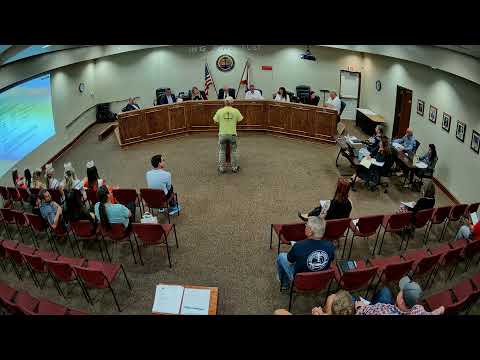
The City of Freeport heard an update on the Marquee Way West road and bridge project March 26 as engineers urged a phased approach to keep work moving while wetland permits proceed.
John, an engineer with All Day Engineering, told the council the project has advanced to the 60% design stage and that stormwater, drainage and roadway requirements have been completed. He said the permitting process differs markedly between upland and wetland work and proposed phasing construction so upland sections are permitted and built first.
"If we phase it, we could start the upland portion in probably six to seven months," John said, describing a timeline that includes bidding, contractor mobilization and preconstruction steps. He added that upland ERP permits could take roughly 60 days to review and about 120 days total to finalize once submitted. By contrast, he said, wetland permitting timelines are unpredictable because the reviewing agency does not provide fixed turnaround times.
Councilman Ferris said phasing would show visible progress and help relieve traffic sooner. The council sought consensus rather than a formal motion, and members signaled support for proceeding with the phased approach.
John also said a small number of parcels needed for the wetland portion remain unsecured, which could delay that phase; those acquisitions are concentrated in the wetland area. He outlined a two‑contractor or two‑phase bidding strategy to shorten on-site construction time if the council prefers separate upland and wetland contracts.
Why this matters: Phasing could let the city demonstrate near-term progress on a long‑delayed project and reduce construction time, but it does not eliminate the uncertainty of wetland permits or the need to secure remaining right-of-way in wetland areas.
Next steps: Staff will circulate the 60% submittal to council as public record, continue coordination with DOT for federal-aid eligibility of the bridge portion, and return with permitting and acquisition updates.