Get Full Government Meeting Transcripts, Videos, & Alerts Forever!
Get email alerts on the Local Elections topic
No spam. Unsubscribe anytime.
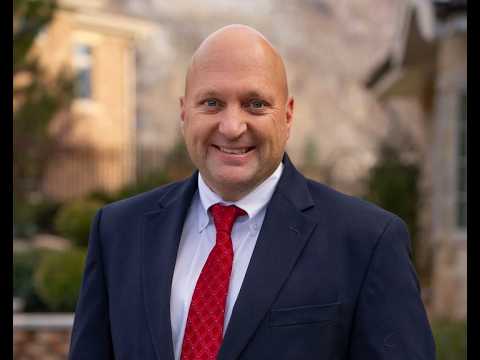
Aaron Perry frames sheriff bid around culture change, cost savings and cooperation with federal immigration authorities
Summary
In a vetting session with the Davis County Conservatives, Aaron Perry said he is running for sheriff to 'give back,' prioritized culture change and fiscal efficiency in the sheriff’s office, described corrections reforms and opioid‑settlement partnerships, and said he would notify ICE about jailed noncitizen criminal offenders (meeting date not specified in transcript).
Aaron Perry, a lifelong Davis County resident and candidate for Davis County sheriff, told a Davis County Conservatives vetting session that he is running to "give back" and would prioritize culture change, fiscal efficiency and stronger partnerships to improve public safety. "I'm running for sheriff because Davis County is my home and the sheriff's office still feels like my home," Perry said.
Perry said he has served in Davis County, Roy City and Weber County in law‑enforcement leadership posts and holds a Master of Public Administration from Brigham Young University. He described a management approach focused on finding efficiencies rather than cutting programs: "I want to create a culture of cost savings where every employee buys into this kind of... vision of finding cost savings, not necessarily cuts," Perry said, and cited work in Weber County to reconfigure contracts with state and federal partners to stabilize jail revenue.
The candidate addressed corrections issues after delegates raised concerns about in‑custody deaths. Perry said he could not confirm specific homicide claims but acknowledged that deaths in custody have occurred and pointed to reforms in Weber County that increased medical and mental‑health services in the jail and used opioid‑settlement funds to contract community partners to provide treatment starting at intake.
On budgeting and contracted services, Perry said cities that contract with the sheriff’s office should pay the actual cost of services and that the county general fund should continue to bear countywide jail costs. He cited an existing relationship with the county controller as useful for evaluating contracts and costs.
Asked how he would handle civil unrest and catastrophic events, Perry described mobilizing deputies to support Ogden and Salt Lake efforts in 2020 and said presence and clear public messaging — "we welcome peaceful protests but we will not tolerate riots" — helped prevent violence in his description of those responses.
On the question of being a "constitutional sheriff," Perry said he would defend constitutional rights, voiced strong support for Second Amendment protections and said he would be attentive to perceived encroachments on religious and First Amendment freedoms. He added that he would not enforce mandates he believes to be unconstitutional but would first try to resolve concerns through dialogue with partners: "If I feel like it's unconstitutional, I'm not going to enforce it," he said.
Delegates asked about a 2023 law affecting eligibility for sworn roles; Perry characterized it as narrow, applying to certain legally present visa holders rather than broad non‑citizen eligibility. He described a Weber County example where a legally present civilian employee later became a sworn officer after naturalization and said that case helped fill staffing gaps.
On immigration enforcement, Perry said state law requires that the sheriff’s office notify federal authorities about jailed people who are in the country unlawfully when arrested for certain offenses; he said he would continue that practice and work with ICE and DHS on criminal offenders. "I will do that on all individuals in the jail here illegally," Perry said, adding that he supports partnerships such as 287(g) arrangements to focus on criminal elements in the jail.
Perry closed by describing his leadership philosophy and a brief anecdote about community recognition that shaped his approach to personnel: he said he wants deputies who "feel seen" and an office culture that looks for collaborative solutions across divisions. The vetting session ended without a formal vote or action recorded in the transcript.
The transcript does not specify the meeting date.