Get Full Government Meeting Transcripts, Videos, & Alerts Forever!
Get email alerts on the Facilities Plan topic
No spam. Unsubscribe anytime.
Vigo County board unveils option to consolidate high schools and build new east-side campus; residents voice equity concerns
Summary
The board released Option 6—convert North and South into middle schools, keep West Vigo, and build a new east-side high school—saying it balances savings and geography. Speakers from the NAACP and local residents raised concerns about community loss, transportation and transparency.
The Vigo County School Corporation publicly released a facilities plan in late June 2025 that would restructure high‑school capacity and modernize aging buildings, with officials recommending “option six” as the district’s preferred path forward.
Dr. Hemzel, who led the facilities discussion, said the plan responds to declining enrollment, deferred maintenance and the need to position the district for long‑term fiscal stability. He described option six as building a new high school east of the Wabash River, retaining West Vigo as the other high school, and converting North and South high schools into middle schools to reduce duplicative operating costs.
The board emphasized tradeoffs: option six, Dr. Hemzel said, “allowed us to equalize some of our middle‑school experiences by transitioning … north and south into middle schools” while preserving two high schools to reflect geography and community preferences.
Why it matters: presenters cited decades of deferred preventive maintenance in older buildings and a projected decline in high‑school enrollment that, by 2029–30, could leave fewer than 3,200 students across the three high schools—making the current footprint unsustainable. The district released multiple options (six, later a seventh was modeled) and stressed that some scenarios yield greater cost savings but worsen geographic or educational tradeoffs.
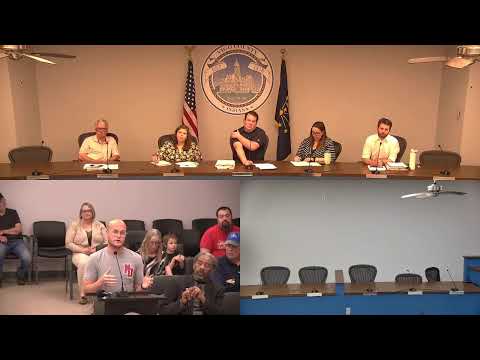
Public comment at the meeting was lengthy and largely critical of consolidation as a first step. Sylvester Edwards, president of the Greater Terre Haute NAACP, warned that consolidation risks eroding community identity and access to after‑school opportunities for students who rely on local schools. He urged the board not to “overlook our kids” and highlighted transit barriers and the social consequences of closing neighborhood schools.
Other residents raised transparency and cost concerns. Jody Kimbrough, a teacher and candidate for county commissioner, questioned whether the plan reflected the will of taxpayers and noted an estimated preliminary cost for one new high school exceeding $222 million, excluding land acquisition and additional features. Connie Spear and Rosemary Scott urged caution about the size of consolidated schools, transportation time for students, and the effect on vulnerable students who may be lost in larger buildings.
Board members and county officials said the board had released the plan publicly on June 20 (adopted by the board June 23, per a clarifying exchange) and that next steps include review by an oversight board and county financial analysis by Crowe and Baker Tilly to clarify funding options and county participation. Officials said they could begin site work as early as late 2026 in an optimistic scenario, with an opening target of 2029, but that timeline depends on funding partners and permitting.
No formal county commitment or binding funding agreement was announced at the meeting. Board leaders said the district can move forward without county help on a smaller scope (group two) but that county and foundation contributions would enable a broader package (group one). The meeting concluded with strong public interest and requests for additional detailed cost breakdowns, transparent funding sources and a clear description of impacts on transportation and special‑needs services.