Get Full Government Meeting Transcripts, Videos, & Alerts Forever!
Get email alerts on the District Finance topic
No spam. Unsubscribe anytime.
Vigo County school officials outline 2025 finances, warn enrollment-driven revenue squeeze
Summary
District finance presentation showed 2025 education fund revenue of $117.8 million, heavy reliance on state tuition support (about $115.6M), rising circuit-breaker tax-cap losses and use of GEO bonds to cover maintenance; officials said transfers and reserves help bridge shortfalls but long-term pressure remains.
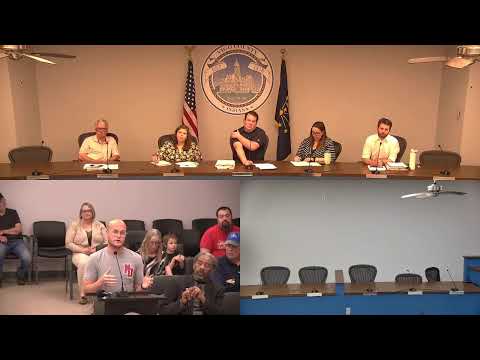
Vigo County School Corporation officials told a public forum on June 23, 2025, that the district’s core operating funds are under increasing pressure as enrollment declines and state funding formulas shift. Donna Wilson, who presented the financial overview, said the education fund—the district’s largest—recorded $117.8 million in revenue for calendar year 2025, down from $124 million in 2024.
Wilson said tuition support from the state remains the primary revenue source, reporting $115.6 million in tuition support for 2025. She explained that a recent change by the state eliminated a stand‑alone textbook rental fund and embedded that money into the basic grant, affecting year‑to‑year comparisons.
Why it matters: the basic grant and other categorical counts are driven by student head counts taken in October and February, so enrollment declines directly reduce state tuition support. Wilson noted fall enrollment fell from 13,160 students in 2023 to 12,609 in 2025, a loss of 551 students that she said makes it “extremely difficult to implement any cost‑saving measures” spread across 23 school buildings.
The presentation broke down spending: teacher salaries totaled $50.3 million and total personnel costs across the education fund were about $90.6 million—roughly 89% of education fund expenditures in 2025. Wilson highlighted that the district transfers up to 15% of education fund revenue to the operations fund under state law; in 2025 that transfer was just under $16 million (about 13.6% of education fund revenue) to support transportation, utilities and maintenance.
Officials also flagged property‑tax limitations. Circuit‑breaker tax‑cap credits reduced collections and cost the district about $8.5 million in 2025; the presenter cited early DLGF estimates that circuit‑breaker losses could exceed $10.5 million in 2026. To manage large maintenance needs while protecting operations balances, the district has issued rolling general‑obligation bonds—about $65.3 million since 2017—to fund major projects, and noted some energy‑savings contracts will be paid off by 2029, freeing future operating dollars.
Wilson summarized fund balances at year‑end 2025: the education fund cash balance was just over $31 million, the operations fund $15.2 million, and the operating referendum fund $2.6 million. She said the 2026 budget reduces the education→operations transfer to $14 million to reflect budgetary pressures and preserve reserves.
Officials cautioned that federal ESSER funding that boosted balances during and after COVID has ended; costs that ESSER previously covered have shifted back into regular operating funds where they must be sustained. The district is urging continued outreach with state legislators and exploring grant opportunities, but emphasized the structural challenge of a foundation amount that has not kept pace with inflation.
Next steps: presenters said the district will continue monitoring enrollment, pursuing grants, and working with county and state partners to identify funding options. The forum included follow‑up questions from board members about monthly cash burn rates, and the presenters said education‑fund monthly expenses run around $9.5 million and operations between $3 million and $4 million.