Get Full Government Meeting Transcripts, Videos, & Alerts Forever!
Get email alerts on the Social Services topic
No spam. Unsubscribe anytime.
Board backs school support programs and approves recovery-house and classroom funding from abatement funds
Summary
The board approved additional funding requests for county education and recovery programs: Communities In Schools sought funds to expand substance-abuse programming across nine schools; the board also approved $11,000 for recovery-house fees and $42,566.72 to equip a classroom for workforce and life-skills training, using drug-abatement funds.
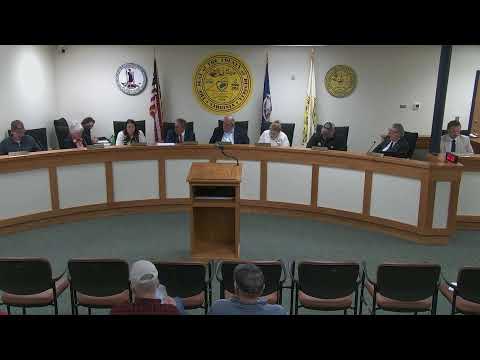
Two presentations at the Russell County Board of Supervisors' March 30 meeting focused on in-school supports and recovery services.
Tony Bush, program director for Communities In Schools in Russell County, described in-school support coordinators serving all nine county schools and said the program had distributed over 5,000 basic-need items (clothing, hygiene and food) year-to-date. Bush requested additional opioid/abatement (OA) funds to expand substance-abuse prevention and tiered interventions countywide; in remarks he proposed $2,000 per school to extend programming and said county funding would help leverage regional matching grants.
Missy Carter, who oversees the county's community work and recovery programs, reported 34 people currently in recovery or work programs and summarized program outcomes: savings to the jail system (she estimated more than $173,000) and other measured community-service benefits. Carter asked the board to approve two allocations from drug-abatement funds: $11,000 to cover recovery-house fees for up to 10 people and $42,566.72 to outfit a classroom and provide furnishings, computer stations and training equipment. Carter said these investments would support participant stability, workforce skills and longer-term public-safety outcomes.
Board members asked clarifying questions about program oversight, staffing and whether requested funds would pay salaries (Carter said the classroom funds would not be used for salaries; the recovery-house money was to cover fees). After discussion the board approved the two Carter requests and separately took action on funding for the Communities In Schools expansion as recorded in the meeting packet and motions.
What happens next: County staff will allocate the approved drug-abatement funds to the recovery-house provider and to Missy Carter's classroom project and will record the expenditure; Communities In Schools will work with county staff to use the local allocation to pursue matching regional funds and to expand programming in the additional schools Bush identified.