Get Full Government Meeting Transcripts, Videos, & Alerts Forever!
Get email alerts on the Housing And Homelessness topic
No spam. Unsubscribe anytime.
Residents urge tighter parking rules and more housing transparency amid rise in visible homelessness
Summary
In an extended public comment period, dozens of Crescent City residents pressed the council for clearer development oversight, better sanitary services for encampments and stronger parking rules to address RVs and trailers near multi-unit housing.
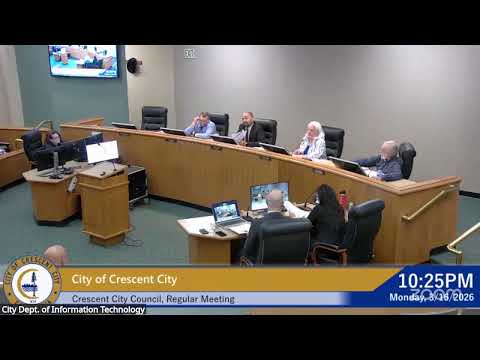
Dozens of residents urged the Crescent City Council to confront a surge of visible homelessness, an influx of oversized RVs and what speakers said is a lack of transparency around recent housing projects.
The public-comment segment—about an hour long—opened with Gloria Corron, a Crescent Arms resident, who said RVs and campers are parking on nearby streets, using dumpsters and leaving human waste and animal excrement on property. “They don't observe the parking ordinances,” Corron said, asking the council to amend parking rules to bar oversized recreational vehicles on side streets near vulnerable housing.
Other speakers recounted seeing people with shopping carts near the county transfer station and along Highway 101, and many connected these observations to broader anxieties about new apartment developments. Longtime residents said they’re seeing changes to the town’s character and questioned whether state and county grant-funded projects are being guided by adequate impact studies. “We don't have jobs here,” said Jim Nelson, urging the council to consider the strain on local emergency services if housing growth outpaces employment.
At the same meeting, several residents pushed for housing-first solutions and transitional housing. Mike Tomkins praised local efforts to open a shelter and transitional housing. James Rosenberg, who described himself as a survivor of domestic violence who benefited from transitional programs, said the county has insufficient housing at all income levels and argued that a mix of housing types and wraparound services is essential.
Other commenters raised related issues: lack of porta-potties and shower access at encampments (Alicia Williams), neighborhood parking shortages (Heidi Kim), flood-zone and infrastructure concerns tied to new multi-unit projects (Mark Bower), and calls for more accessible public information—flow reports and wastewater treatment details—from residents such as Shauna Hyatt.
Why it matters: The public-comment session displayed sharp local divisions. Some residents regard new developments as necessary to provide housing and support local workforce needs; others see large projects as out of scale and a risk to infrastructure and neighborhood character. Council members and staff often framed the projects as responses to documented local housing shortages, but many speakers asked for more transparent, earlier engagement and clarified data about who housing programs actually serve.
What’s next: The council did not take legislative action on the public comments that night (standard rules prohibit action on non-agendized items), but staff said some subjects could be moved to future agendas or special sessions. Council members indicated they will circulate study materials online and explore further public engagement sessions.
Attribution: Quotes and specific claims come from public comments recorded at the March meeting; the council’s procedural limits on action for non-agendized items were stated on the record by the presiding mayor.