Get Full Government Meeting Transcripts, Videos, & Alerts Forever!
Get email alerts on the Education Budget Staffing topic
No spam. Unsubscribe anytime.
Naperville CUSD 203 hears hours of public protest over proposed teacher cuts as board narrows staff-reduction plan
Summary
At a March 16 public hearing, administrators described a projected roughly $12.4 million operating shortfall for 2026–27 and presented options including staff reductions. Dozens of students, parents and teachers urged alternative cuts and phased approaches; the board later approved a smaller staffing reduction—about 50 certified positions—after earlier votes on an initial RIF authorization failed.
Naperville Community Unit School District 203 held a public hearing March 16 to review proposed reductions in force after administrators said long-term revenue trends and one-time funding losses left the district with a significant operating shortfall.
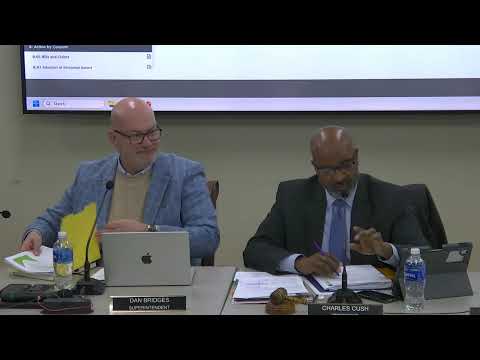
Superintendent Dan Bridges told the board and a packed public gallery that a five‑year financial forecast showed the district facing a structural deficit that must be addressed to preserve long‑term fiscal stability. “The concern shared over our teachers is a testament to the high caliber of our district staff and the deep connections they build with students,” Bridges said, adding that the administration has identified roughly $4 million of non‑personnel reductions so far and that salaries and benefits account for more than 80% of operating spending.
The administration laid out tools it has used to limit layoffs, including attrition, a retirement incentive program and internal spending cuts, and explained the legally prescribed Illinois School Code process — commonly called the sequence of honorable dismissal — by which any RIF would have to proceed. Dr. Meredith Hagens, assistant superintendent for human resources, emphasized that the sequence is governed by statutory groups, evaluation ratings and seniority-based bumping rules.
But the evening’s sharpest focus was the public comment period. More than 80 speakers — mostly students, parents, coaches and teachers — urged the board to find alternatives to honorable dismissal for early‑career and untenured educators who, speakers said, are integral to instruction and extracurricular programs. Student speakers named specific teachers and coaches they said would be irreplaceable and cited petitions and community support: “When we talk about cutting teachers, we are not talking about trimming excess,” said Neaperville Central senior Gavin George. “We are talking about increasing class sizes, reducing individual attention for students, eliminating programs, and putting more strain on the educators who remain.”
Several educators and counselors warned of programmatic impacts if support roles are removed. “The proposal to eliminate two counselors from each high school … will eliminate essentially eight social‑emotional support roles,” said Jacine Quiet, a central high‑school social worker, who added that requests for mental‑health support are rising.
Speakers also questioned district choices and timing. Multiple commenters referenced the district’s historic practice of rebating some surplus funds and asked why the board could not spread reductions over multiple years or use reserves for a phase‑in. A number of parents and students pointed to planned capital work — including large renovations and a transportation hub discussed publicly in recent months — and asked whether timing and sequencing of capital versus operating choices could be realigned.
Board action was fragmented. Early in the meeting the board considered a resolution that would have formally authorized the honorable‑dismissal process for a list of teachers; the motion failed on roll call. After additional public comment, the board then closed the hearing and resumed the regular agenda. Later the board amended the administration’s staffing recommendation down from the larger package originally presented and approved an amended proposal that reduces certified staffing by approximately 50 positions for 2026–27. The roll call on the amendment showed a majority in favor, with at least one dissenting vote.
What happens next: the administration will complete its formal budget recommendation in May and proceed with necessary job postings for known vacancies tied to retirements and resignations. The district also continues to gather retirements and attrition data (administration said a retirement incentive produced modest short‑term savings to date and that sign‑ups continue through early April), which will affect how many positions must ultimately be reduced or reassigned.
The hearing underscored a stark tension: the district’s fiscal outlook, shaped in administrators’ telling by expiring federal aid, lower investment income and capped property‑tax growth, versus community resistance to losing early‑career teachers, coaches and counseling staff. Board members repeatedly said they wanted to protect student‑facing positions where possible while balancing the district’s statutory obligation to present a balanced operating budget.
The board’s amended staffing motion passed; board members said they will continue to seek transparency on operating budgets, examine non‑personnel savings, and weigh longer‑term options that could reduce the need for immediate personnel reductions. The superintendent reiterated that the budget recommendation will return to the board in May for final action.