Get Full Government Meeting Transcripts, Videos, & Alerts Forever!
Get email alerts on the SB180 Legal Risk topic
No spam. Unsubscribe anytime.
Staff warns Senate Bill 180 could limit Boynton Beach's proposed resilience and development policies
Summary
Consultants and city staff told commissioners the recently adopted SB 180 restricts adoption of policies judged 'more restrictive or burdensome,' creating a risk that resilience, environmental or other policy additions could be returned or legally challenged after transmittal to the state.
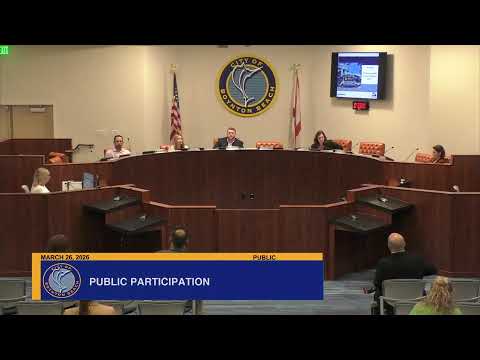
City staff and consultants told the Boynton Beach commission on March 26 that Senate Bill 180, adopted in 2024, may constrain some proposed changes in the comprehensive-plan update and increase the legal risk when the city transmits the document for state review.
Consultant Nelsa Zacharias summarized the statutory effect in plain terms: "There is a specific language in this bill that says prohibit adoption of more restricted or burdensome policies objectives," and staff said the law is currently effective retroactive to Aug. 1, 2024 for jurisdictions under a federal disaster declaration. Staff noted the statute includes language that could apply to comprehensive plans, LDRs, permitting or development-review processes and that some recent plan transmittals around the state have been returned with warnings under SB 180.
City staff also reported that multiple local governments have joined litigation challenging SB 180; staff recounted a recollection that about 15 to 16 municipalities had joined a class-action-style challenge but offered to provide updated, sourced information. The commission agreed staff should monitor legal developments and prepare explanatory materials; one staff member offered to draft a memo outlining how SB 180 could affect the city's proposed policies.
Staff emphasized there remains value in transmitting the plan (which also goes to regional agencies, such as the South Florida Water Management District and FDOT) so those agencies can comment. Staff said many of the draft policies are long-term (planning to 2050) and that an expiration provision in SB 180 leaves open a future window to revisit language should the statute change.
Next steps: staff committed to preparing follow-up information on SB 180 (including citations and the status of any litigation), to include statutory considerations in the strike-through/underline draft, and to proceed with Local Planning Agency and transmittal timelines while monitoring legal risk.