Get Full Government Meeting Transcripts, Videos, & Alerts Forever!
Get email alerts on the Education Edtech topic
No spam. Unsubscribe anytime.
Evanston District 65 board approves one-to-one iPad purchase after heated public debate
Summary
After more than an hour of public comment and a detailed presentation on shared-cart and one-to-one models, the Evanston CCSD 65 Board voted 5-2 to approve a one-to-one student iPad purchase for SY 2026-27. Parents and advocacy groups urged alternatives citing developmental, cost and equity concerns.
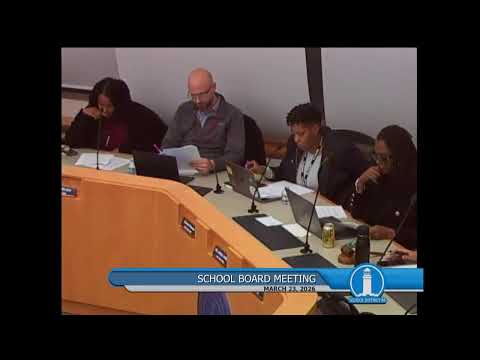
The Evanston CCSD 65 Board of Education voted 5-2 on March 16, 2026 to approve the districtpurchase option one, continuing a one-to-one iPad device model for the coming school year.
The vote followed a district presentation reviewing three procurement options and an extended public comment period in which parents, teachers and community groups urged the board to scale back device distribution for younger students or to adopt shared-device cart models. Technology staff and administrators recommended the one-to-one refresh as the most predictable, cost-effective option that preserves instructional flexibility.
"It is the most cost-effective purchase for next school year and it's a predictable model," said Elena Caserus, who led the technology presentation. Staff described the district's existing refresh cycle, buyback revenue assumptions and the technical limits of shared carts, noting Apple's shared-iPad setup requires newer hardware and is operationally complex.
Public commenters pressed the board in multiple directions. "Please vote no on this expensive and unfounded purchase," Karly Johnson said during public comment, arguing research ties increased screen time to poorer literacy outcomes in young children. ScreenSense Evanston and other parent groups urged shared-cart models, more aggressive filtering and a formal parent opt-out for non-curricular device use.
Supporters of the purchase, including some board members and district staff, said devices are integrated into curriculum and assessments and are difficult to unwind without disrupting instruction. Board discussion emphasized the need for stronger district policies on how devices are used, clearer expectations for teachers, and better monitoring of active vs. passive student use.
The roll-call vote recorded board members Pinkard, Hernandez, Wymer, Wilkins and Anderson as "Yes" and Optike and Van Nstrand as "No." The motion was made and seconded during the meeting; the board officially recorded the motion as passing 5-2.
What happens next: Administration will proceed with procurement and provisioning so devices can be prepared over the summer. Board members asked administration to return with tightened device policies, options for opt-in/out rules for home use, and metrics to track instructional ("active") usage versus passive consumption.
Actions at the meeting: The board also approved several facilities and contract items and accepted a draft master facilities plan presentation by consultants from Studio GC, who estimated long-term capital needs districtwide.