Get Full Government Meeting Transcripts, Videos, & Alerts Forever!
Get email alerts on the Public Safety Fire topic
No spam. Unsubscribe anytime.
Council hears broad debate over paid firefighters, volunteer funding and fire districts
Summary
Council members pressed staff for options to fund increased fire coverage, including creating fire-service districts (FSAs), reallocating town/county contract splits and adding paid county firefighters for 24/7 coverage; staff were asked to consult fire chiefs and the county attorney before the next budget cycle.
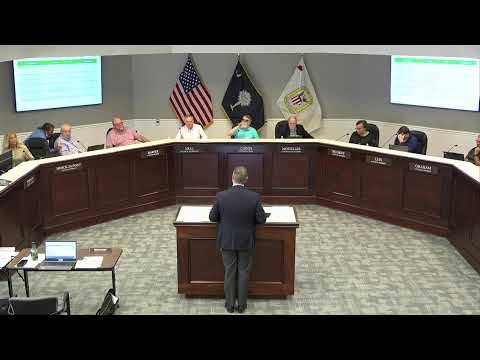
Lancaster County council spent much of the budget workshop on how to pay for growing fire-service needs as housing developments and call volumes expand across the county.
County Administrator Willis and fire leaders outlined competing pressures: volunteer departments that still require training, equipment and grants; growing neighborhoods that need faster response times; and an expensive option to place paid county firefighters at new stations. Chief Ruth told the council, “This year, 2025, we ran roughly 400 calls,” and said her department has requested an additional paid person, turnout gear and an outside storage building for equipment.
Greg Nicholson, who presented the volunteer and county-staff budgets, said the county is seeking six career firefighters for the McDonald Green station plus six for a southern secondary location and two additional maintenance staff. Nicholson said those paid positions would provide countywide 24/7 response and materially improve the county's ISO evaluation, but they would substantially increase operating costs and require a long-term funding plan.
Several council members questioned whether towns and fire districts are paying an equitable share. One member said call-location estimates showed roughly 75% of calls in unincorporated areas, and proposed a temporary contract split of two-thirds county/one-third town for the Kershaw arrangement while staff audit actual call data. Staff and commissioners noted the change could require a formal resolution and must be in place when the budget is finalized.
The broader policy question centered on funding mechanisms. Staff outlined three funding options: letting volunteer districts levy local fees (the current model in parts of the north end), creating fire-service areas (FSAs) that collect rooftop fees or millage for operating costs, or establishing a countywide capital district to fund stations and training facilities. Mr. Willis warned council that municipalities must opt in or opt out of some district models because municipal governments are statutorily required to provide fire service inside their boundaries.
Council direction: the administrator was instructed to assemble fire chiefs and the county attorney for a meeting with outside counsel, gather clear call-location data and return with a recommendation and timelines. No budget-level decisions or final votes were taken in the workshop.
What happens next: staff will prepare the legal framework and data necessary for council to decide whether to (a) fund additional paid staff through the county operating budget, (b) require districts or rooftop fees in certain areas, or (c) pursue capital funding for stations and a live-fire training facility through CIP or a bond proposal.